A drip in the ceiling is stressful, especially in the middle of a storm. And the first big storm after a dry Bay Area summer is when many leaks show up for the first time: sealant has dried out, shingles have lifted in the heat, and gutters and valleys are packed with leaves. This guide walks you through the first 24 hours in order, so you know what to do and what to avoid.
First, stay safe
- Do not go on the roof. Wet roofing is slippery and storms bring wind. Falls are the biggest danger in a roofing emergency.
- Watch for water near electricity. If water is dripping near a light fixture, outlet or ceiling fan, turn off the power to that room at the breaker panel, but only if you can reach it without standing in water. Do not use the affected fixtures.
- Keep clear of bulging or sagging ceilings. A ceiling holding water can fall. Move people and pets out of the room.
- Call 911 if there is an immediate danger, such as an electrical hazard, a structural collapse or a fire.
Your first 24 hours, step by step
| Time | What to do | What to avoid |
|---|---|---|
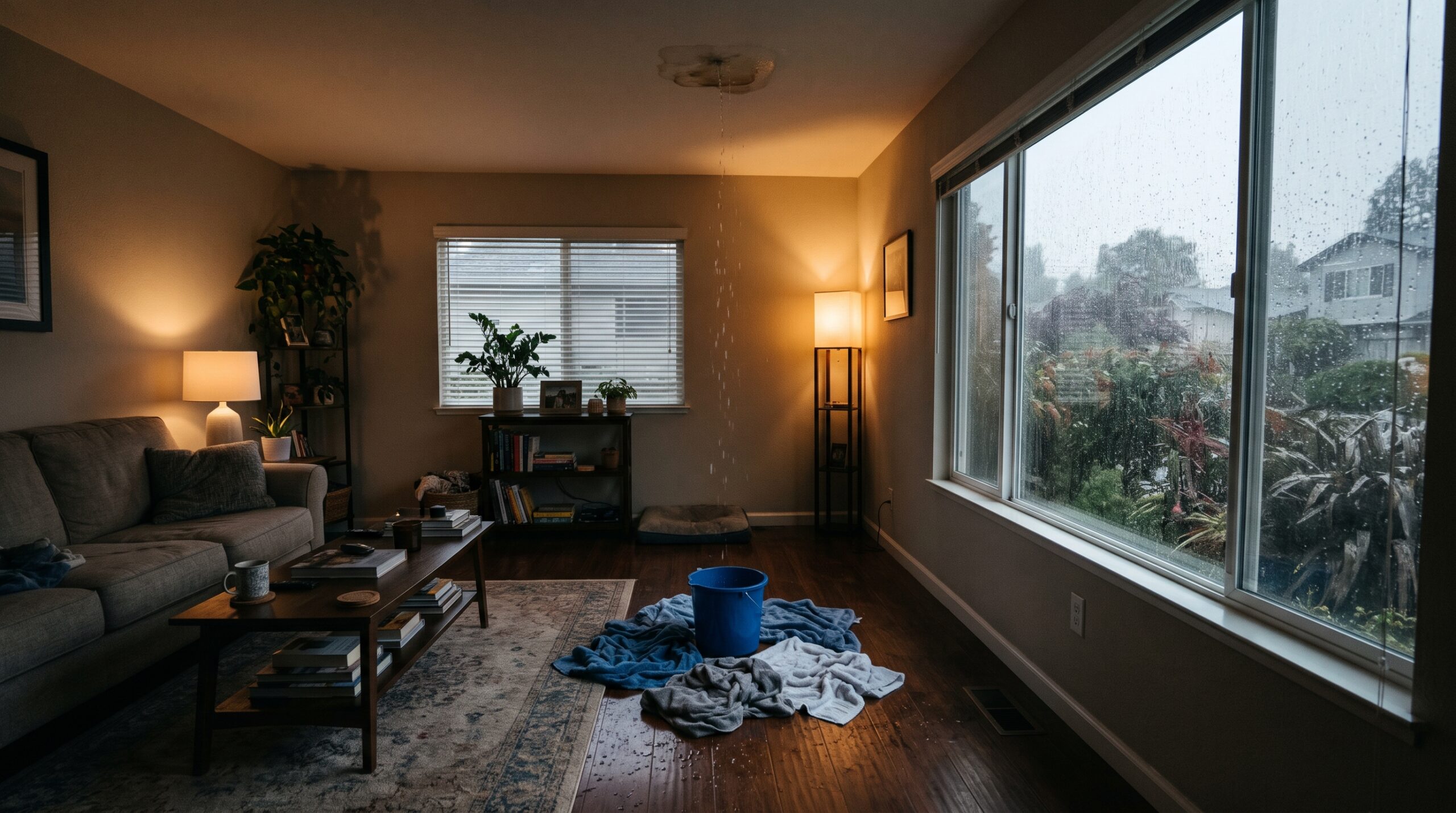
| Hours 0 to 1 | Put buckets or containers under drips and lay down towels. Move furniture, rugs and electronics away from the leak and cover what you cannot move with plastic. | Ignoring a small drip, or climbing up to look for the source. |
| Hours 1 to 4 | Photograph and video the drip, the stain and any visible damage, with the date and time. If the attic is safely accessible, look with a flashlight for wet wood or wet insulation above the leak. Trace the ceiling stain in pencil and write the time next to it. | Assuming the hole is directly above the stain. Water often runs along rafters before it drips, so the entry point can be well away from the stain. |
| Hours 4 to 12 | Call a roofing company and your insurance agent (see below). Describe where and when the leak started, share your photos and mention how old the roof is. | Smearing roofing cement or caulk on the roof in the rain. Quick patches can trap moisture and cause rot. |
| Hours 12 to 24 | Start drying the area with fans or a dehumidifier. Open windows only when it is dry outside. Keep receipts for anything you buy to limit the damage. | Throwing out wet materials before you photograph them, or painting over the stain. |
Why the first storm finds the weak spots
After months of sun and no rain, small problems stay hidden until water tests them. The most common causes of a first-storm leak are:
- Cracked, lifted or rusted flashing around chimneys, skylights and vents
- Debris packed into roof valleys and gutters, which sends water under the shingles
- Cracked, curled or missing shingles or tiles
- Dried or worn sealant around pipes and vents
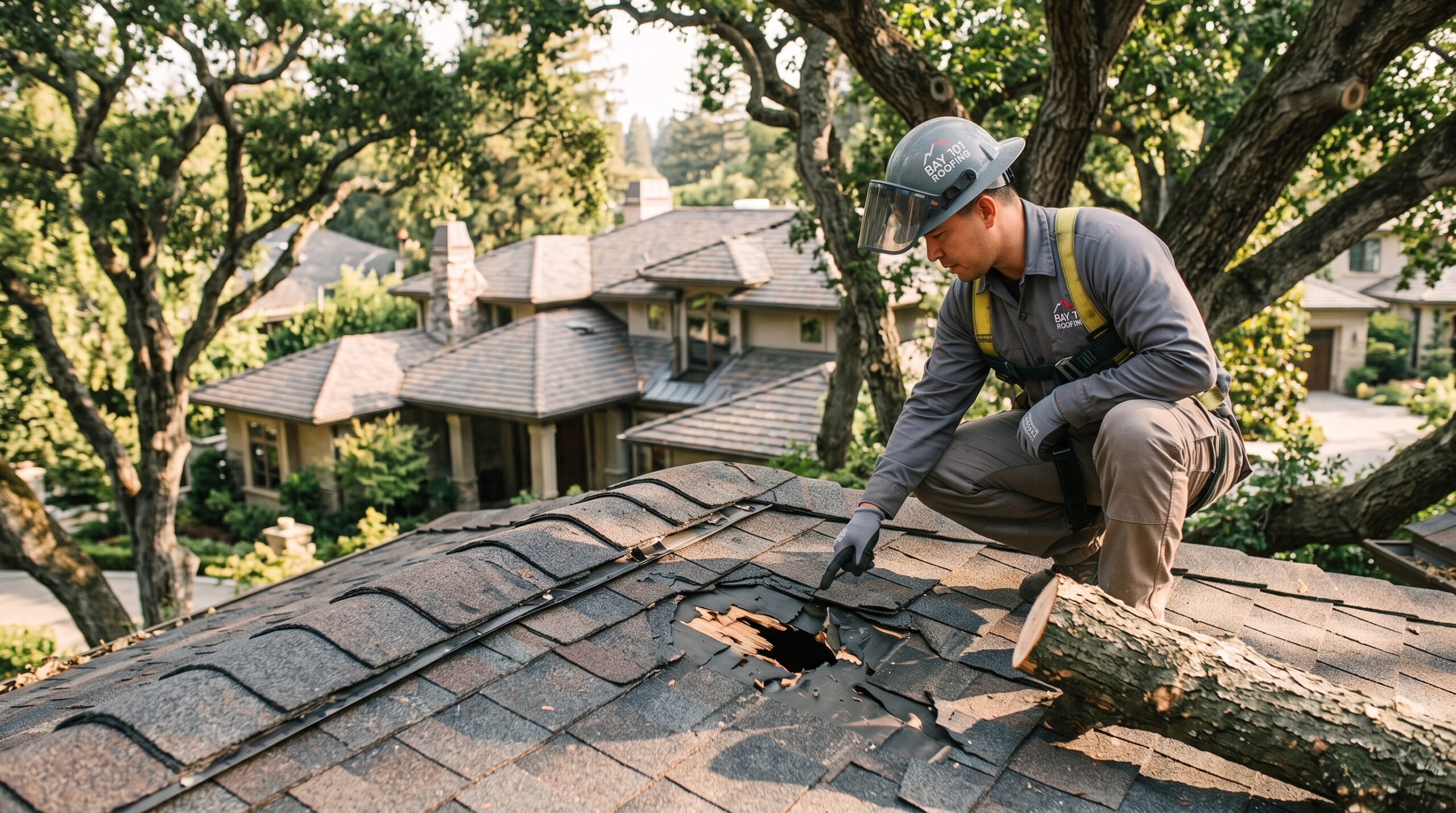
- Punctures or cracks from fallen branches or recent tree work
Our guide to the top causes of roof leaks in the Bay Area goes deeper on each of these, and our post on damage after tree trimming covers hidden punctures.
Getting the roof fixed
Call your roofer as soon as you have contained the water. Bay 101 Roofing can be reached at (408) 957-0531, Monday to Friday, 8:00 to 4:00, or you can request a free estimate online. For repairs, we aim to provide a free estimate within 24 to 48 hours, and most residential repairs are finished in a few hours to one day once work begins.
If the leak starts on a weekend or after hours, contain the water, document the damage and follow the safety steps above, then call as soon as the office opens. Ask the roofer whether a temporary cover is needed until the repair, and leave the installation to a professional, since it requires working on a wet, sloped roof.
When you call, have these details ready: where the stain or drip is, when it started, your photos, the approximate age of the roof and whether the roof has been repaired before.
Talking to your insurance company
Contact your insurer promptly. Policies differ on what is covered, such as sudden storm damage versus damage from wear, and on deductibles and how quickly you must report a loss, so read yours or ask your agent. Keep your dated photos, notes and receipts together. Bay 101 Roofing provides professional inspections and written documentation that can support a claim, but you work directly with your insurer.
One more reason to avoid DIY patches: an improper repair can make it harder to show what caused the damage. Read why summer roof patching often fails.
Repair or replace?
Localized damage on a relatively young roof can usually be repaired. Widespread wear, repeated leaks or a roof that is 20 to 25 years old often points to replacement as the better long-term value. A professional inspection tells you which applies to your home. Our guide on how to know if your roof needs replacement explains the signs, and you can see how a full job works on our roof replacement page. Our roof replacements include a 10-year workmanship warranty, and repairs come with a workmanship guarantee.
Frequently asked questions
- Can I fix a roof leak myself? We strongly recommend a licensed roofing professional. Roof work is dangerous, and a patch applied in the wrong place or with the wrong material can trap water and cause hidden rot.
- How long does a roof repair take? Most residential repairs are completed in a few hours to one day, depending on the size of the damage and the materials needed.
- Will my insurance cover a roof leak? That depends on your policy and the cause of the leak. Contact your insurer right away and keep photos and receipts. A roofing inspection can document what is wrong.
- Should I put a tarp on the roof myself? We do not recommend going on a wet roof. Ask a roofer whether a temporary cover is needed and have them install it.
- How soon can mold start after a leak? Mold can begin to grow within 24 to 48 hours of water exposure, which is why drying wet areas quickly matters.
Need help with a leak?
Bay 101 Roofing is a licensed (California contractor license #907116) and Diamond Certified roofing contractor serving San Mateo and Santa Clara counties and the surrounding Bay Area. Request a free estimate or call (408) 957-0531, Monday to Friday, 8:00 to 4:00.