After a dry Bay Area summer, the first real storm is the first test your roof has had in months. Sun, heat and falling leaves can crack sealant, lift shingles and pack gutters and valleys with debris, and none of it shows until water finds a way in. The rainy season typically runs from about October through February, so late fall is the best time to find weak spots while the weather is still on your side.
You do not need a ladder for any of this. Every check below can be done from the ground, from your attic or from inside the house. Never climb onto a roof yourself. It is dangerous, especially when the surface is damp.
The 10-point fall checklist
1. Scan the roof surface from the ground
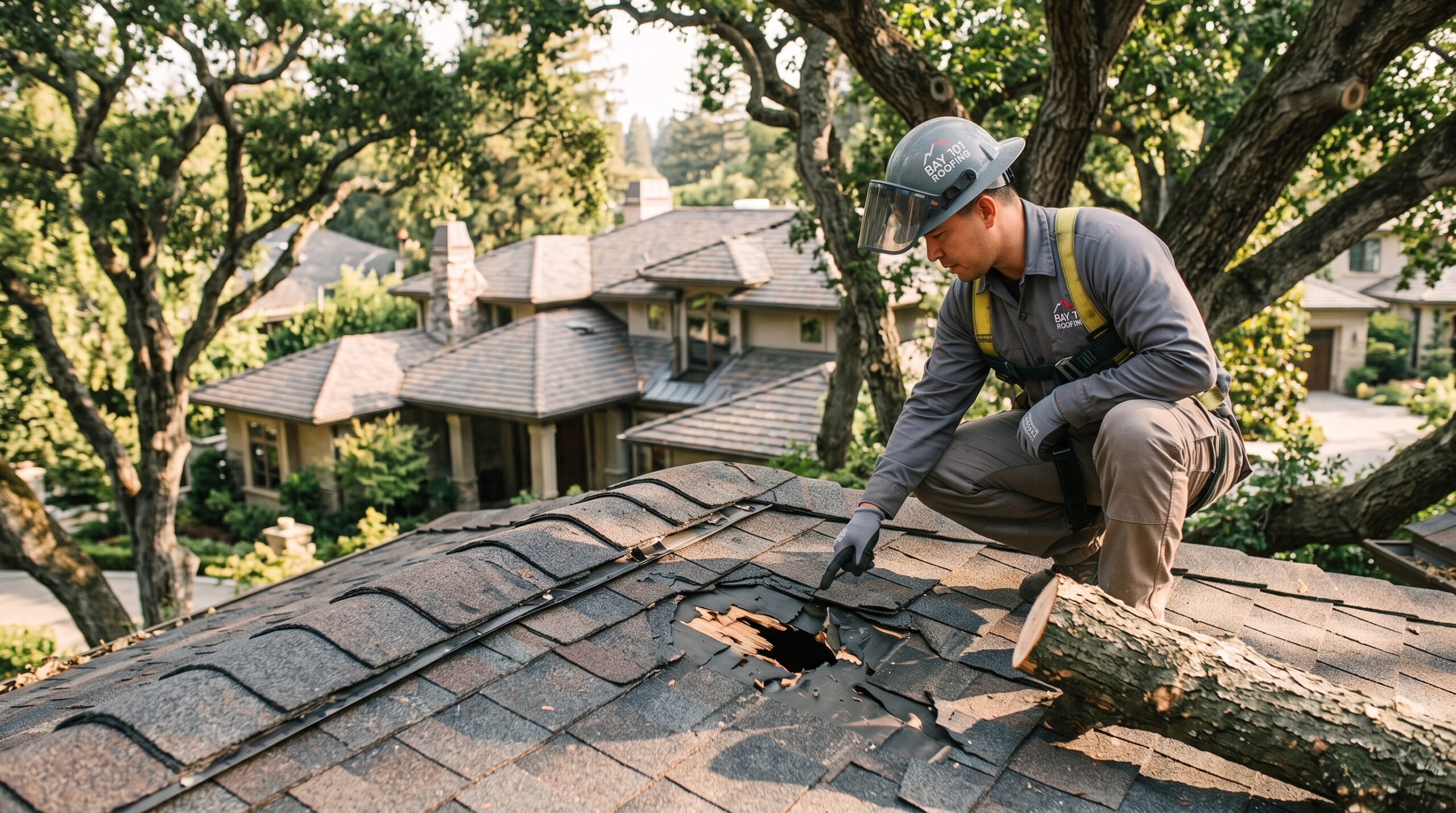
Walk around your home and look at every slope. Your phone’s camera zoom or a pair of binoculars helps. Look for curled, cracked, missing or buckled shingles, broken or shifted tiles, and any shingles along the ridge or hips that look like they are lifting.
2. Look for granules in the gutters and at the downspouts
Check the base of your downspouts and the inside of your gutters. A pile of sand-like grit is shingle granules, the protective layer that shields the asphalt from the sun. Heavy granule loss is a common sign that a roof is aging.
3. Clean the gutters and downspouts
Gutters should be cleaned at least twice a year, usually in spring and fall, and more often if you have trees nearby. Clogged gutters send water over the edge and back under the shingles. Make sure each downspout carries water away from the foundation. If cleaning is a chore you keep postponing, ask about gutter guards and new gutter options.
4. Inspect the flashing
Flashing is the metal that seals the joints around chimneys, skylights, vents and wall edges. Look for gaps, lifted edges, rust and dried, cracked sealant. These joints are among the most common places for a roof to leak.
5. Check the valleys for debris
Valleys, where two roof slopes meet, carry a large share of the water that runs off your roof. Leaves, pine needles and small branches can pile up there and dam the water. If you can see debris sitting on the roof, ask a roofer to clear it instead of going up yourself.
6. Look at the trees around your home
Branches that hang over the roof drop debris and can scrape or puncture roofing in wind. Trim them back, and if a tree service has worked near your house recently, read our guide on checking for hidden damage after tree trimming.
7. Check the attic
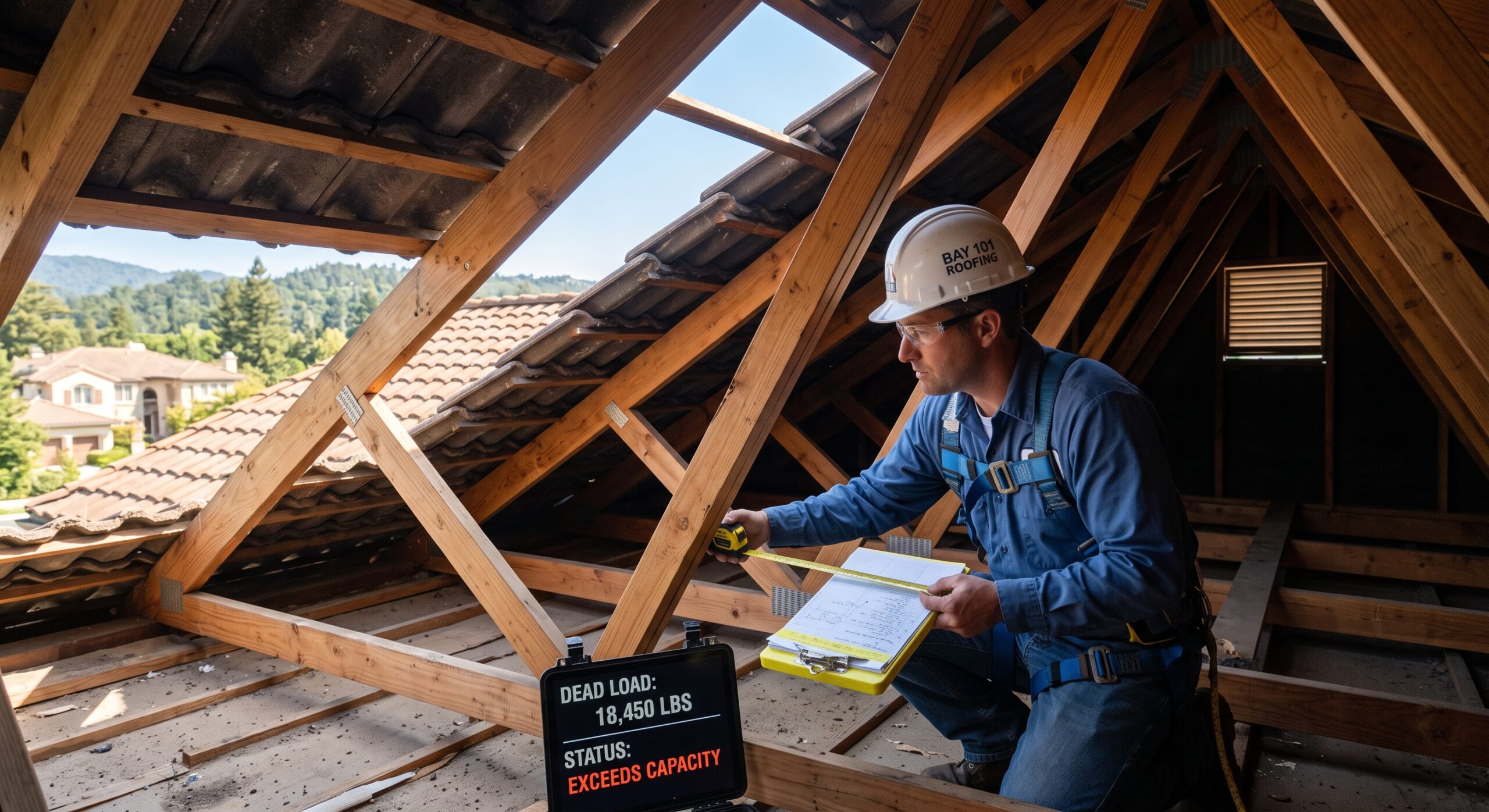
On a dry day, go into the attic with a flashlight. Look for slivers of daylight through the roof deck, dark or damp wood, water stains, wet or flattened insulation and a musty smell. A damp or musty attic can also point to a ventilation problem, which we explain in our guide to attic ventilation and mold.
8. Check ceilings and walls for stains
Look for brown rings, peeling paint or bubbling drywall, especially below roof valleys, chimneys and vents. A stain may be old. Trace its outline in pencil and write the date next to it, so you can tell whether it grows after the next rain.
9. Look for moss, algae and black streaks
Moss and dark streaks mean moisture is staying on the roof. Left alone, they can lift shingles and wear away granules. Skip the pressure washer, which strips the protective granules off asphalt shingles. Our post on why black streaks are more than cosmetic explains what to do instead.
10. Photograph the roof and find your paperwork
Take dated photos of every side of the roof, the attic and any ceiling stains. Then dig out the records that show when the roof was installed and what warranty came with it. Most composition shingle roofs need replacing after about 20 to 25 years, so knowing your roof’s age tells you how much life it likely has left. Dated photos also give you a clear before-the-storm record if you ever need to make an insurance claim.
What your findings mean
| What you see | What it may mean | Next step |
|---|---|---|
| A few cracked, curled or missing shingles or tiles | Localized damage | Book a roof repair before the heavy rain |
| Heavy granule loss or curling across the whole roof | An aging roof | Schedule a professional inspection |
| A ceiling stain that grows after rain | An active leak | Act quickly; read what to do in the first 24 hours of a leak |
| Loose, lifted or rusted flashing | A likely leak point | Have it resealed or replaced |
| Gutters that sag, rust or overflow | Water running onto the roof edge and fascia | See our gutter options |
| A roof 20 or more years old with several of the signs above | A roof near the end of its life | Request an inspection and a roof replacement estimate |
When to call a professional
If anything in the table goes beyond a minor fix, or your roof is more than about 15 years old and has not been inspected recently, book an inspection before the rain arrives. Roofs should be inspected at least once or twice a year and after major storms.
Bay 101 Roofing offers free estimates, and most residential repairs are completed in a few hours to one day. If the roof needs replacing, most projects take 2 to 3 days and come with our 10-year workmanship warranty.
Frequently asked questions
How often should a roof be inspected? At least once or twice a year, and after any major storm. Regular inspections catch small problems before they turn into expensive repairs.
When should I clean my gutters? At least twice a year, typically in spring and fall. Homes near trees may need it more often.
Can I inspect my own roof? You can check the roof from the ground, from the attic and from inside the house, as described above. Do not climb onto the roof. Roofing work and inspection at height is dangerous and best left to a licensed professional.
How long does a roof repair take? Most residential repairs are finished in a few hours to one day, depending on the extent of the damage.
Does a roof inspection cost anything? Bay 101 Roofing provides free inspections and detailed estimates for Bay Area homeowners.
Get your roof checked before the first big storm
Bay 101 Roofing is a licensed (California contractor license #907116) and Diamond Certified roofing contractor serving San Mateo and Santa Clara counties and the surrounding Bay Area. If your checklist turned up something you would like a professional to look at, request a free estimate or call us at (408) 957-0531, Monday to Friday, 8:00 to 4:00.