The Spanish tile and Mediterranean architectural styles defining neighborhoods across Cupertino, Saratoga, and the surrounding South Bay foothills offer undeniable curb appeal. Built largely during the expansion of the 1970s through the 1990s, many of these homes are now reaching the point where their original roof underlayments and tiles require complete replacement.
However, swapping out an aging tile roof isn’t as simple as swapping out asphalt shingles.
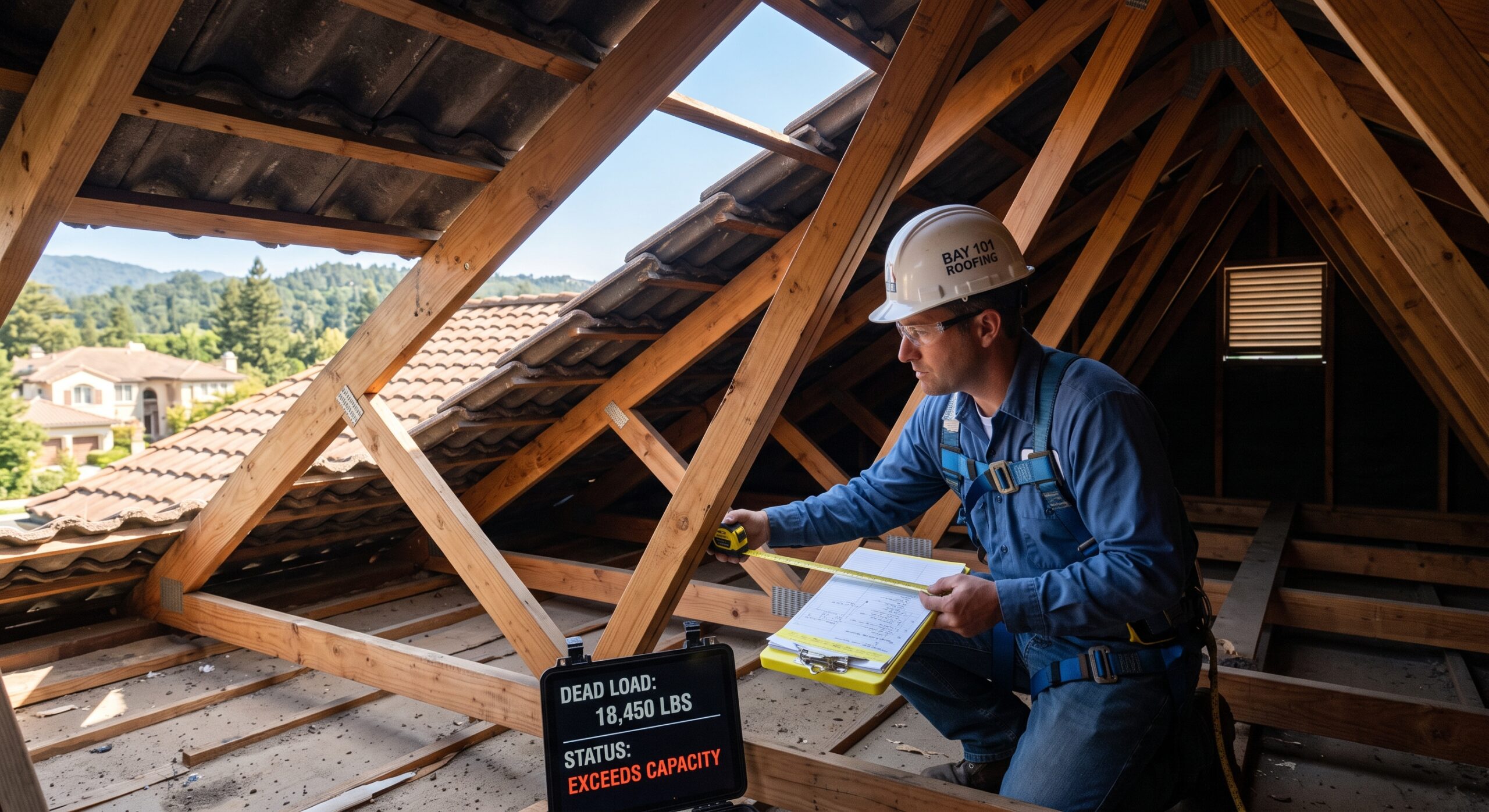
The primary challenge lies in dead load weight. If you are planning a roof replacement, assessing your roof truss framing capacity is vital before choosing new materials otherwise, you risk structural sagging or thousands of dollars in unexpected engineering retrofits.
1. The Numbers Behind Heavy Concrete & Clay Tile
Traditional roofing materials carry immense dead weight that acts on your roof trusses, exterior walls, and foundation every single day:
- Standard Concrete Tile: Weighs between 900 to 1,200 pounds per square (one roofing “square” equals 100 square feet).
- Clay barrel / Spanish Tile: Weighs 800 to 1,000+ pounds per square.
- Total Roof Load: For a typical 2,500-square-foot home in Saratoga, a concrete tile roof exerts 22,500 to 30,000 pounds of continuous downward pressure on the house frame.
Over 30 to 40 years, wood trusses experience structural deflection (subtle sagging) under this relentless load, especially when exposed to moisture intrusion or seismic shifts common in Santa Clara County.
2. Why Structural Framing Inspections Are Mandatory
Before installing new heavy tile, local building departments in Cupertino and Saratoga often require proof that the existing truss system can support the load under current California Building Code standards.
A professional structural evaluation checks three key risk factors:
- Truss Deflection & Rafter Spacing: Checks whether 2×4 or 2×6 rafters spaced 24 inches on center have bowed over time.
- Point Load Connections: Ensures load-bearing interior walls haven’t been modified during past interior remodels, which can compromise roof support.
- Seismic Shear: Heavy roofs act like top-heavy pendulums during seismic activity. Adding heavy replacement tile without adequate structural sheer bracing increases earthquake vulnerability.
If your framing fails an engineering evaluation, you face costly structural retrofitting—adding sister rafters, collar ties, or interior support beams—before a permit can even be issued.
Structural Weight Comparison: Traditional vs. Lightweight Alternatives
| Roofing Material | Average Weight (Per 100 Sq. Ft.) | Structural Engineering Required? | Seismic Impact Risk |
| Traditional Concrete Tile | 900 – 1,200 lbs | High (Mandatory load audit for older homes) | High top-heavy load |
| Spanish Clay Barrel Tile | 800 – 1,000 lbs | High (Requires verified truss capacity) | High top-heavy load |
| Lightweight Composite Tile | 200 – 300 lbs | Low to None (Installs on standard framing) | Low load profile |
| Architectural Shingles | 230 – 350 lbs | None (Standard residential framing profile) | Minimal load |
3. The Solution: Lightweight Composite Tile
If your home’s framing cannot support a second generation of heavy concrete tile or if you want to bypass the high cost of structural retrofits altogether lightweight composite tile provides the ideal alternative.
Engineered from high-grade synthetic polymers, composite Mediterranean tile matches the exact aesthetic profile, deep shadow lines, and classic color palettes of traditional Spanish clay or concrete tile.
- Up to 75% Lighter: Weighing only 200 to 300 pounds per square, composite tile drops directly onto standard framing without structural retrofits.
- Class A Fire & Class 4 Impact: Meets strict California fire safety codes while offering impact protection against falling branches.
- Title 24 Compliant: Features cool-roof solar reflective properties that help reduce attic heat transfer during hot South Bay summers.
Before scheduling your project, take time to check for underlying deck wear. Review our May roof maintenance checklist to catch structural issues early, or read our guide on how long roofs last in the Bay Area.
Protect Your Structure with Bay 101 Roofing
Replacing a Spanish or Mediterranean tile roof requires precise structural calculations. Bay 101 Roofing is a Diamond Certified residential contractor serving Cupertino, Saratoga, and Santa Clara County. We evaluate your roof structure, handle all local municipal permits, and install premium tile and composite systems backed by our 10-year workmanship warranty.
Ensure your roof structure is safe before installing new tile.
Schedule a Free Structural Roof & Weight Assessment or call our local team today at (408) 957-0531 to speak directly with an expert.