If you own a home on the Peninsula or in the South Bay, your roof is your primary shield against everything nature throws your way. Naturally, one of the most frequent questions we get at Bay 101 Roofing is: “How many years do I actually have left before I need a full replacement?”
Because Northern California features radically different weather patterns just a few miles apart, the answer depends heavily on your local neighborhood.
Here is everything you need to know about roof longevity in the Bay Area.
Q: What is the average lifespan by material type?
A: Material choice is the biggest factor in determining your roof’s expiration date. Assuming the roof was installed by a certified professional to current building standards, here is what you can expect:
| Material Type | Average Lifespan in the Bay Area |
| Asphalt Composition Shingles | 20 – 30 Years |
| Architectural / Laminate Shingles | 25 – 35 Years |
| Standing-Seam Metal | 40 – 60 Years |
| Clay / Concrete Tile | 50+ Years |
| Flat Roof Membranes (TPO / PVC) | 20 – 25 Years |
Q: How do Bay Area microclimates affect my roof?
A: A roof installed in Daly City will age entirely differently than the exact same roof installed in San Jose. The Bay Area’s microclimates alter material degradation in a few predictable ways:
- The Fog & Moisture Zone (Daly City, Pacifica, South San Francisco): The persistent coastal fog keeps roofs damp for hours at a time. This dampness accelerates the growth of roof moss and algae. If you’re noticing dark staining, check out our guide on why black streaks are more than a cosmetic issue to see how it cuts your roof’s life short.
- The High-Heat Zone (San Jose, Sunnyvale, Santa Clara): The South Bay sun triggers “thermal shock.” Shingles bake in 90°F+ summer weather during the day, then rapidly cool down at night. This constant expansion and contraction dries out the asphalt layer, eventually leading to cracking and granule loss.
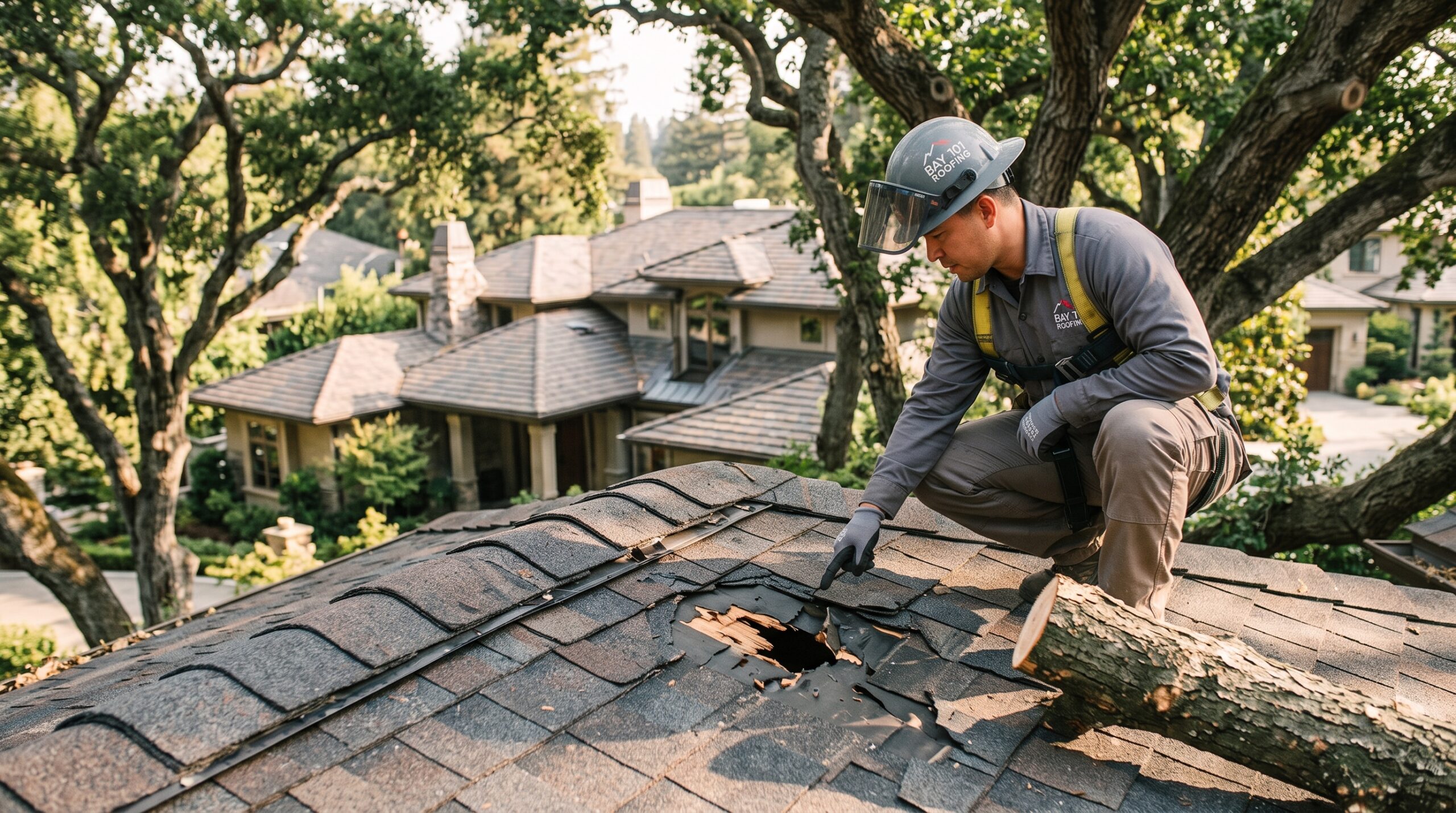
- The Wooded Foothills (Los Altos Hills, Woodside): Overhanging oak and redwood trees drop heavy debris. If left uncleaned, acidic leaf piles trap moisture and rot the perimeter edge of your roof decking.
Q: Can modern building codes extend my roof’s life?
A: Yes, significantly. Under the current California Title 24 Energy Code, modern reroofs require advanced ventilation calculations and solar-reflective “Cool Roof” materials.
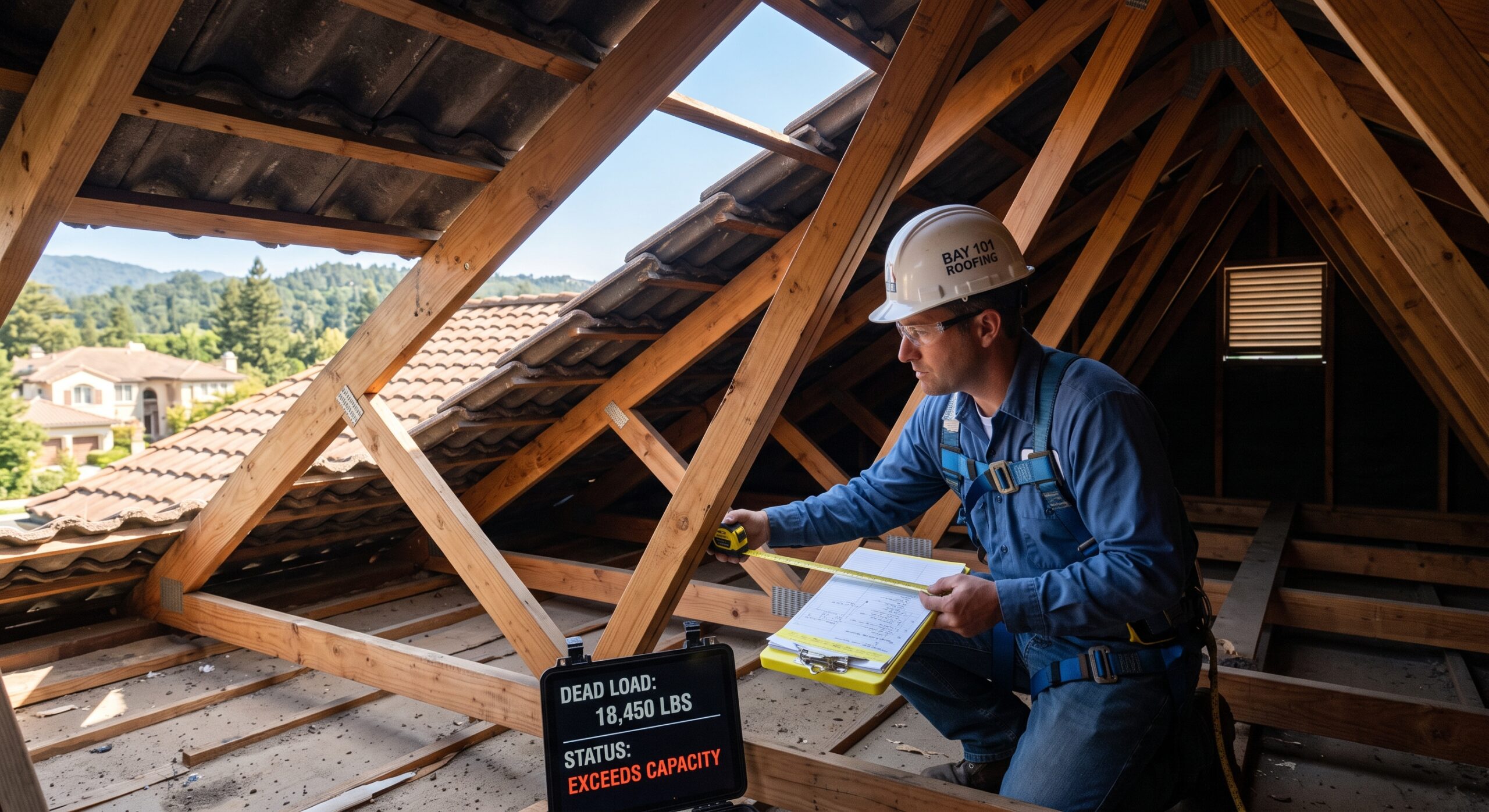
Proper attic ventilation prevents superheated air (which can reach 150°F in a Palo Alto attic during summer) from cooking your shingles from the inside out. By keeping the roof structure cooler, Title 24 upgrades actively prevent premature shingle curling and cracking.
Q: What are the warning signs that my roof is reaching the end of its life?
A: You don’t have to wait for a ceiling leak to know your roof is failing. Keep an eye out for these local red flags:
- Granules in the Gutters: If your downspouts are washing out piles of sand-like ceramic granules, your shingles have lost their UV protection layer.
- Exposed Fasteners: If rusty roofing nails are visible, water can track down the shank directly into your home’s framing.
- Curling or “Cupping” Edges: This is a clear indicator of thermal degradation and inadequate attic ventilation. You can catch these flaws early by taking 10 minutes to go through our May roof maintenance checklist to potentially save thousands in premature replacement costs.”
Local Project Insight: We recently inspected a home in San Mateo built in 2001. While the shingles themselves were structurally intact, completely blocked ridge vents had baked the roof from underneath, causing widespread cracking. We replaced it with a modern, Title 24-compliant system that will easily protect the home for the next 30 years.
Q: Should I replace my roof before installing solar panels?
A: Yes, absolutely. If your roof is over 12–15 years old, you should always sync your reroofing project with your solar installation.
Solar panels are built to last 25 to 30 years. If you install a brand-new solar system over a 15-year-old roof in Palo Alto or San Jose, you will have to pay a solar contractor thousands of dollars to detach and reset your panels just a few years later when the underlying shingles inevitably fail.
Under current Title 24 codes, installing a high-reflectivity “Cool Roof” right before the solar panels go up is the smartest way to maximize your home’s overall energy efficiency and protect the structural deck beneath the racking system.
Maximize Your Roof’s Lifespan with Bay 101
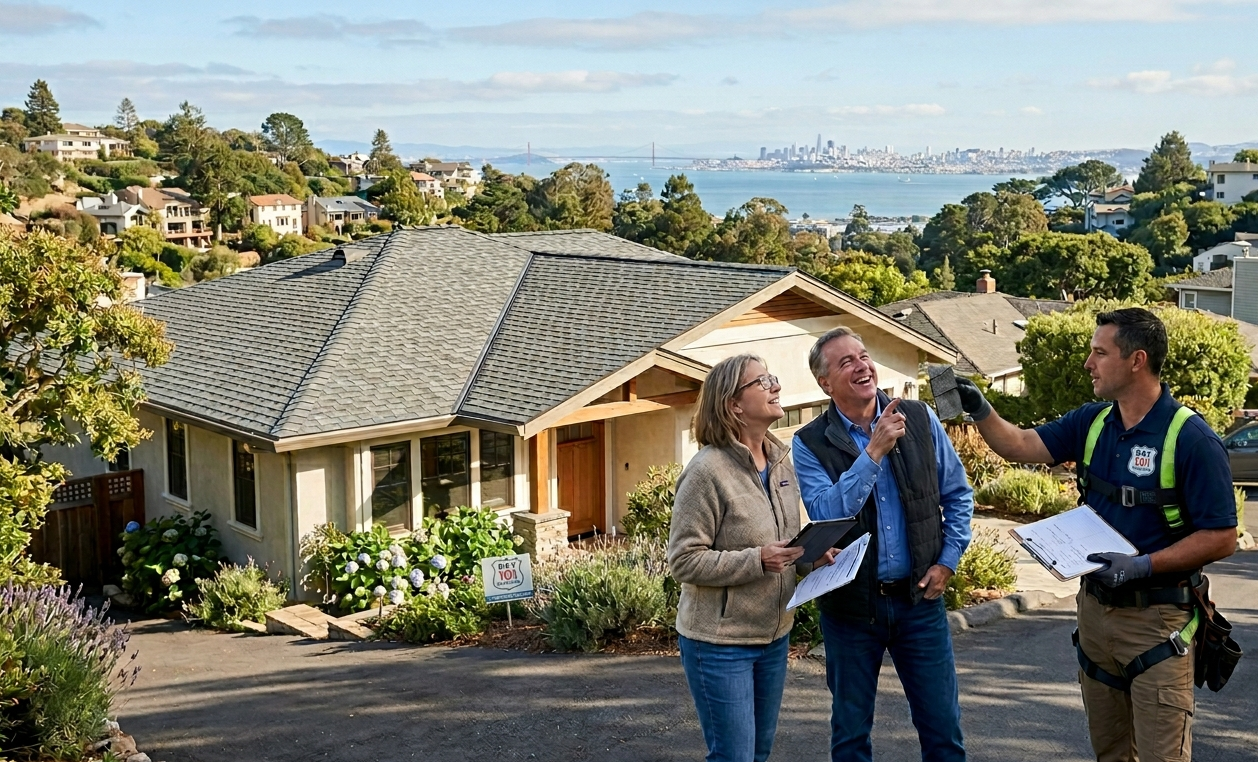
Whether your roof is 5 years old or 25 years old, proactive tracking saves money. As a Diamond Certified roofing contractor, Bay 101 Roofing provides honest, transparent longevity assessments for homeowners from Burlingame to San Jose. We’ll tell you exactly how many years your roof has left and how to extend it.
Unsure how old your roof really is?
Request Your Professional Roof Longevity Audit & Estimate or speak with a local expert today at (408) 957-0531.