Walking down the tree-lined streets of San Mateo or through the historic neighborhoods of Burlingame, it is impossible not to admire the striking architecture of Northern California’s classic Victorians. From ornate Queen Anne details to stately Stick-style frames, these properties are beloved landmarks.
However, owning a piece of history comes with unique stewardship challenges and none are more daunting than handling a Victorian roof replacement. When a 130-year-old roof begins to fail, you cannot simply slap on standard three-tab asphalt shingles. Upgrading these architectural icons requires navigating strict local preservation guidelines, overcoming extreme physical structural challenges, and protecting delicate, centuries-old framing.
Here is what Bay Area homeowners must consider when reroofing a historic Victorian property.
1. Navigating Historical Compliance and Guidelines
Before a single tool touches your property, you have to satisfy local historic preservation boards. Both San Mateo and Burlingame maintain strict architectural guidelines designed to preserve the visual fabric of their historic districts.
Historically, these homes featured natural quarried slate or split wood shakes. Today, local building and fire codes heavily restrict or ban traditional wood shakes due to wildfire risks, creating a architectural paradox: How do you maintain historical accuracy while utilizing fire-safe materials?
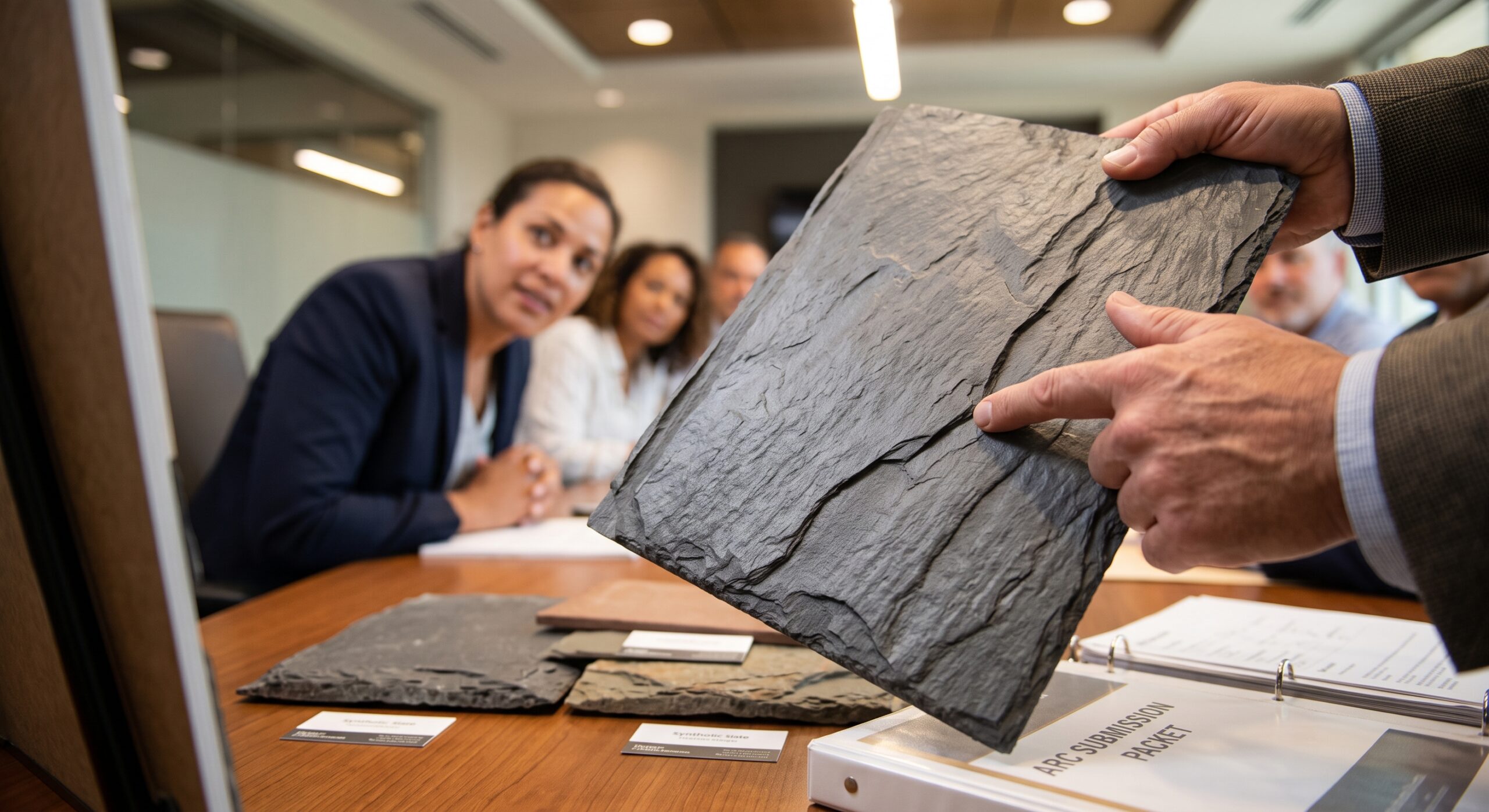
The answer lies in modern synthetic slate or shake roofing. High-end composite materials perfectly mimic the deeply chiseled edges, natural color variations, and textures of real slate or cedar wood. Most importantly, premium synthetic systems achieve a Class A fire rating and are widely approved for synthetic slate historical compliance by local preservation boards. They provide the look of 1890 with the safety engineering of 2026.
2. Conquering the Structural Challenges: Steep Pitches & Turrets
Victorian roofs are architectural masterpieces, but they are a logistical mountain for standard roofing crews. They are characterized by:
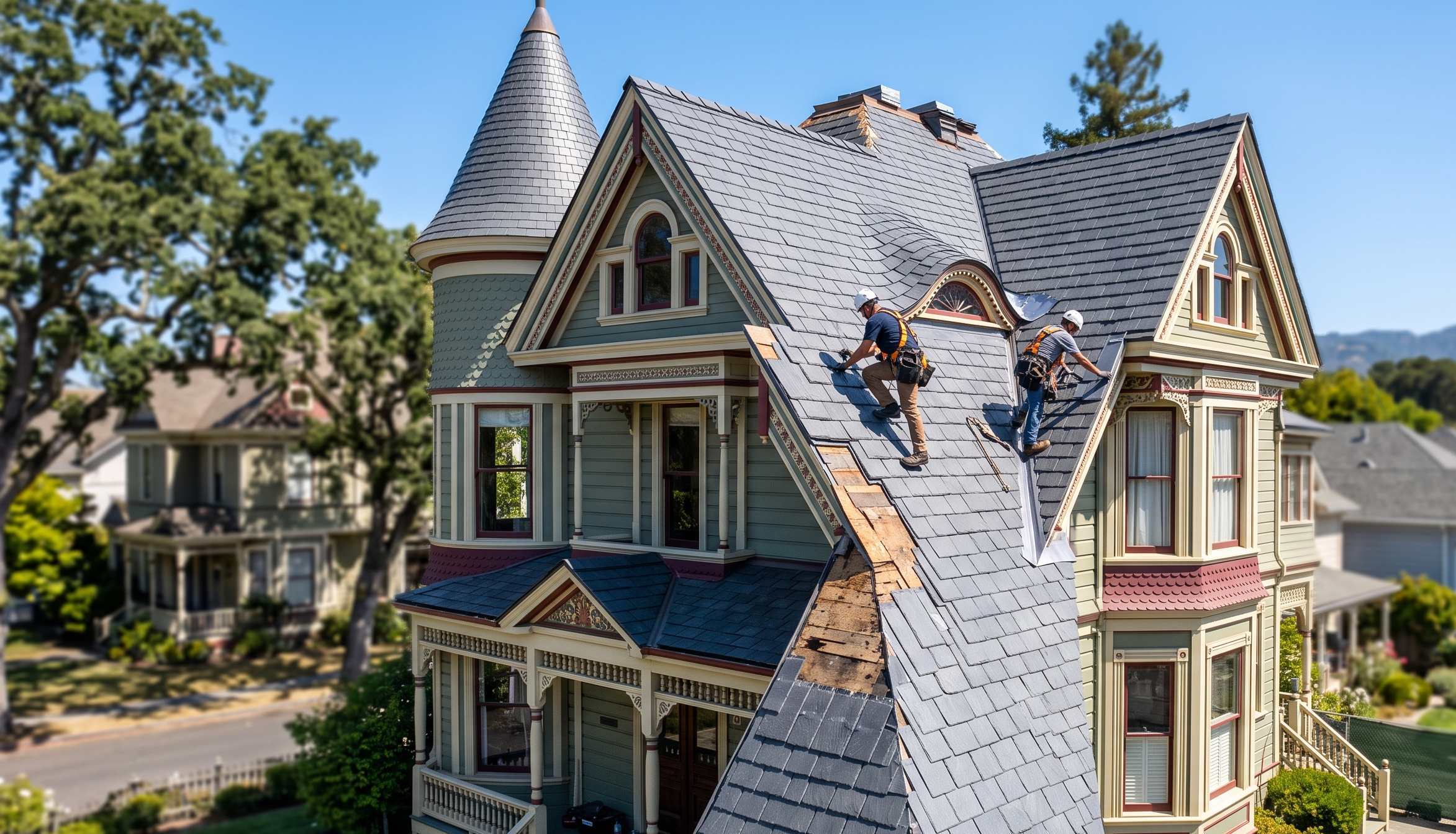
- Extreme Pitch: Gothic and Queen Anne rooflines feature exceptionally steep slopes that require specialized scaffolding, roof brackets, and advanced safety rigging just to traverse the workspace.
- Complex Geometry: Compound gables, intersecting valleys, eyebrow dormers, and conical turrets require master-level custom flashing work. A single incorrectly bent metal valley seam can send water cascading straight behind the historic siding.
Because these homes feature so many intricate, vertical water-shedding transitions, choosing an experienced local crew is non-negotiable.
3. Protecting Vintage Structural Framing
Modern homes are built with uniform, predictable plywood and engineered trusses. Historic Victorians, however, feature old-growth redwood or fir rafters and gaps of dimensional “skip sheathing” originally designed to let old wood shakes breathe.
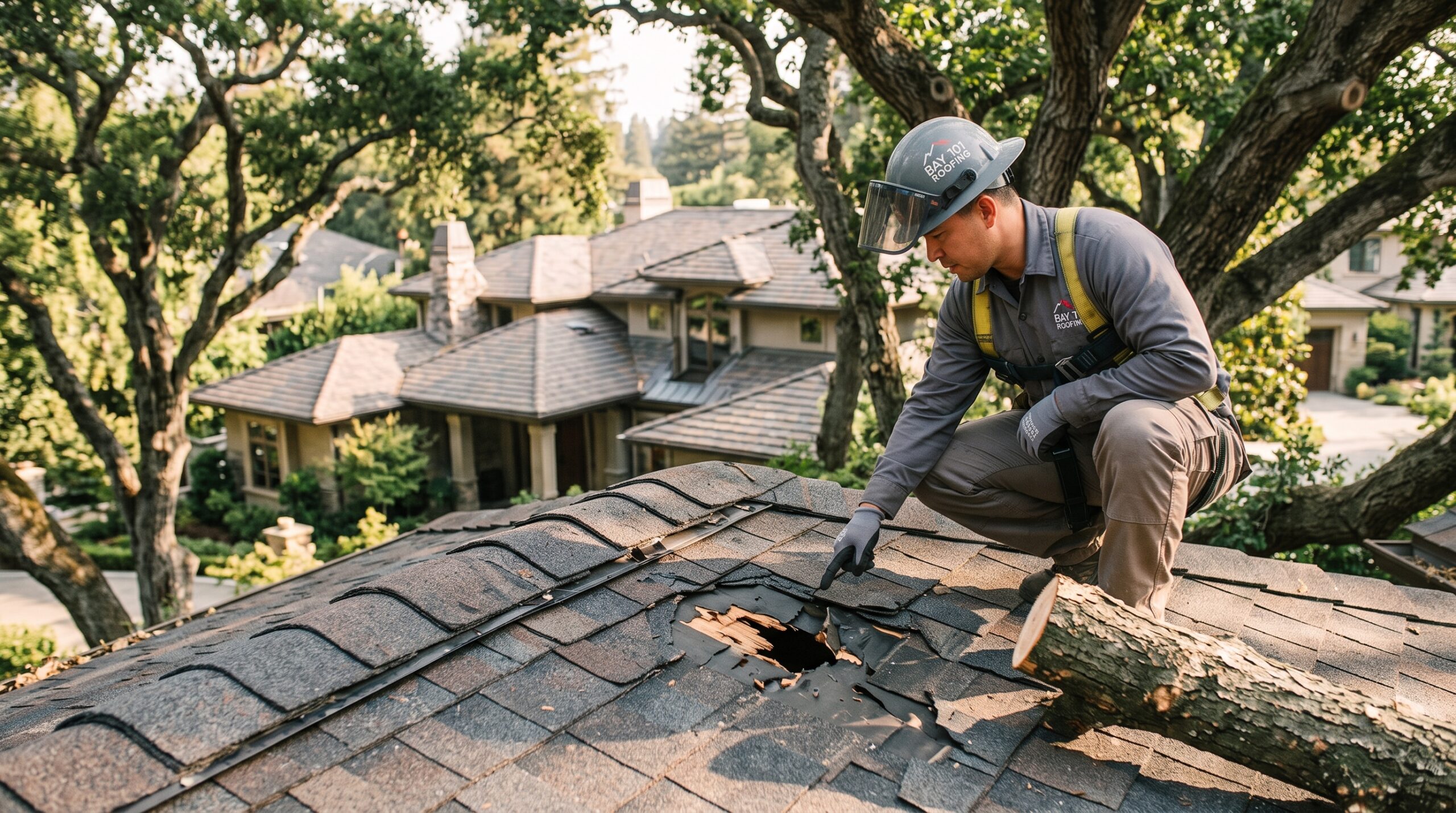
Over the decades, minor, unnoticed leaks often cause invisible dry rot in this irreplaceable old framing. When replacing a historic roof, the existing layers must be carefully stripped away to evaluate the underlying structure. If the original rafters have settled or bowed, the roof deck must be precisely leveled and reinforced with new structural solid sheathing before the synthetic slate can be laid down. Skipping this step results in a wavy, uneven roofline that ruins the home’s historic aesthetic.
Historic Roofing Materials: Traditional vs. Modern Synthetic
| Metric | Traditional Quarry Slate | Modern Synthetic Slate | Wood Shakes (Historic) |
| Aesthetic Value | Authentic, premium look | Flawless historic replication | Rustic look (often code-restricted) |
| Weight Strain | Massive (often requires structural reinforcement) | Lightweight (no framing reinforcement needed) | Light but highly flammable |
| Fire Safety Rating | Class A | Class A (Fire-Safe) | Class C or unrated (High Risk) |
| Lifespan | 75–100+ Years | 50+ Years | 20–30 Years |
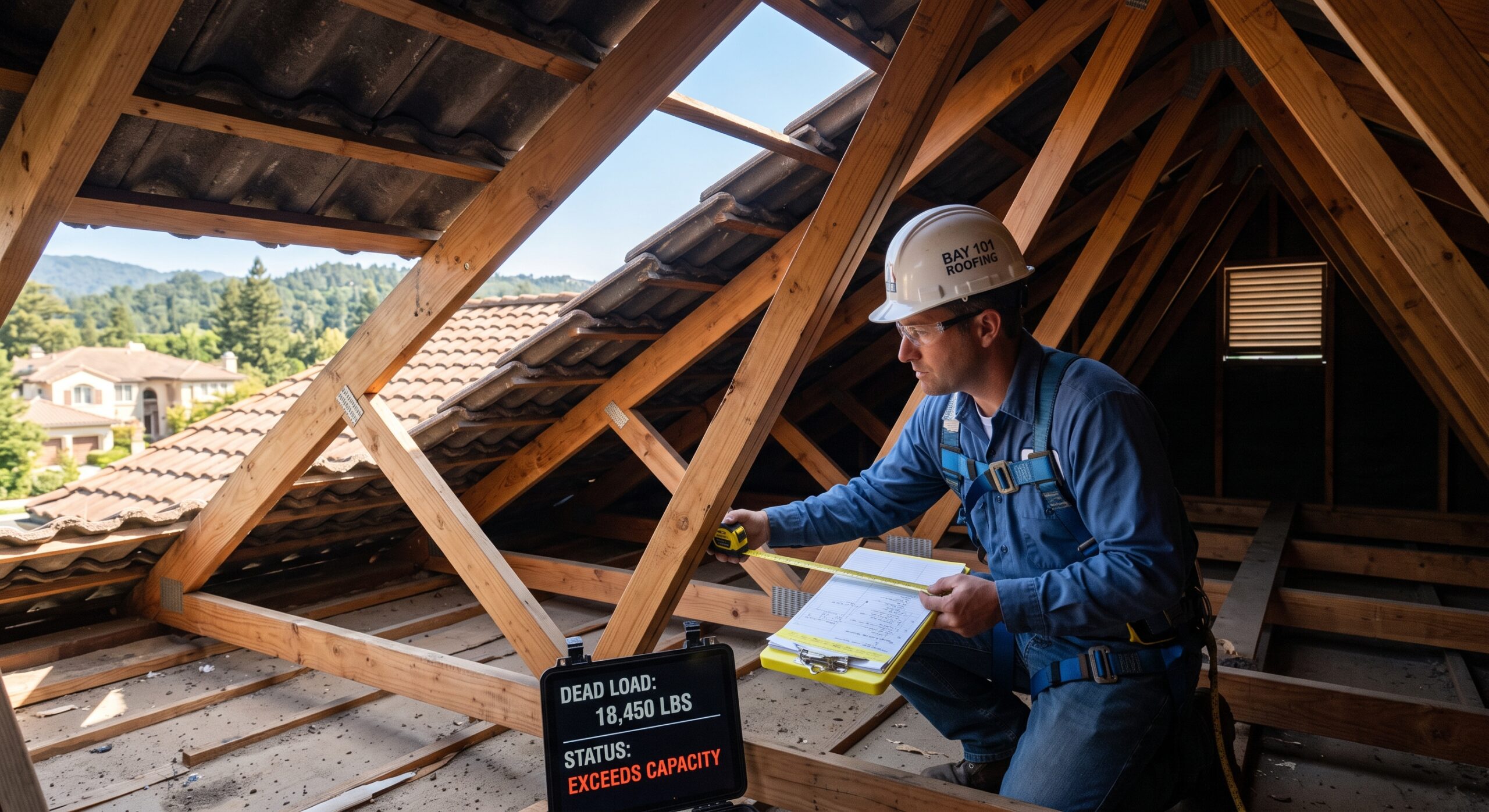
Local Project Insight: We recently evaluated a historic property near Burlingame Avenue where the original structural rafters had began to spread under the weight of an old clay tile overlay added decades ago. By shifting the property to a lightweight, historically compliant synthetic shake, we eliminated thousands of pounds of structural stress on the vintage framing while instantly restoring the authentic 19th-century aesthetic. For a broader look at how local microclimates impact material longevity, review our Q&A on the average lifespan of a roof in the Bay Area.
Entrust Your History to Bay Area Preservation Experts
Your Victorian home is an irreplaceable piece of California’s history. Do not trust its complex structure or architectural integrity to a standard volume roofer. Bay 101 Roofing is a Diamond Certified residential roofing specialist with over 35 years of combined local experience serving San Mateo and Santa Clara counties. We specialize in synthetic slate compliance, intricate valley flashing, and structural framing restoration—all backed by our rock-solid 10-year workmanship warranty.
Wondering how to manage property upgrades effectively this season? Take a look at our May roof maintenance checklist to inspect your historic asset safely from the ground.
Ready to accurately restore and protect your historic roofline?
Request a Professional Historic Roof Consultation & Estimate or call our local Peninsula office today at (408) 957-0531 to speak directly with an expert.