The 2025–2026 winter season was one for the books. Between the atmospheric rivers hitting the San Francisco Peninsula and the heavy saturation in the South Bay, your roof has been under constant hydraulic pressure for months.
At Bay 101 Roofing, we’ve spent the last few weeks responding to emergency calls in Redwood City, Palo Alto, and San Jose. The common thread? Most homeowners didn’t realize they had a problem until the water reached their drywall.
Before the spring heat sets in and “bakes” existing damage, here is your 5-point professional audit checklist.
1. The “Sand” in Your Gutters (Granule Depletion)
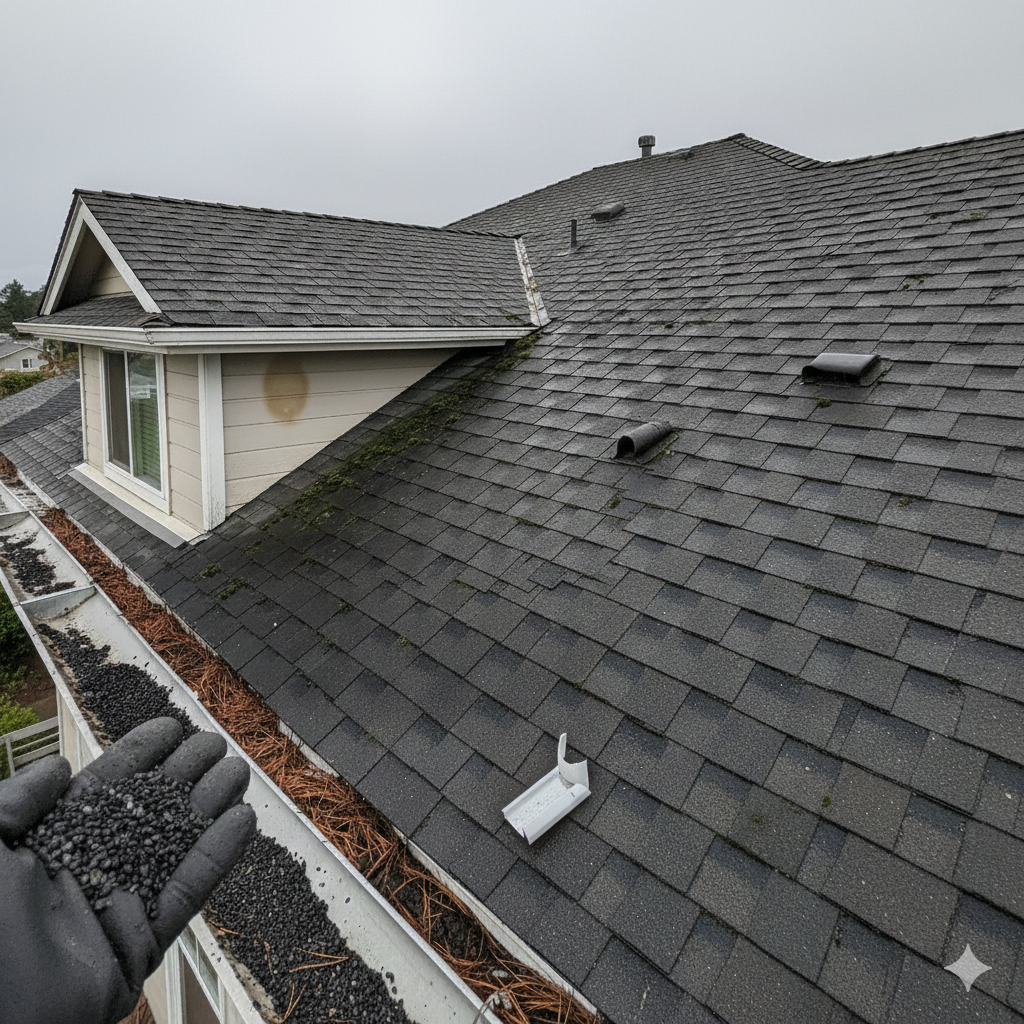
If you see what looks like black coffee grounds in your downspouts, your shingles are “balding.” In wind-prone areas like Daly City or the San Mateo highlands, heavy rain physically strips the protective granules off asphalt shingles.
- The Risk: Without granules, the California sun will “cook” the asphalt underlayer this summer, leading to cracks and total failure by next winter.
2. Microclimate Algae & “Hot Spots”
The Bay Area microclimates—especially the fog belt near Pacifica and Half Moon Bay—create a breeding ground for Gloeocapsa magma (black algae).
- What to look for: Dark, soot-like streaks. This isn’t just an aesthetic issue; these organisms hold moisture against the shingle, rotting the organic mat underneath.
3. “Thermal Shock” at the Flashing
Bay Area springs are famous for cool mornings and warm afternoons. This temperature swing causes your roof’s metal flashing (around chimneys and vents) to expand and contract.
- The Problem: After a heavy rain season, the sealants around these vents often crack. We recently found dozens of “stealth leaks” in Sunnyvale homes where the shingles were perfect, but the pipe boots had failed entirely.
4. The Attic “Ghost” (Hidden Moisture)
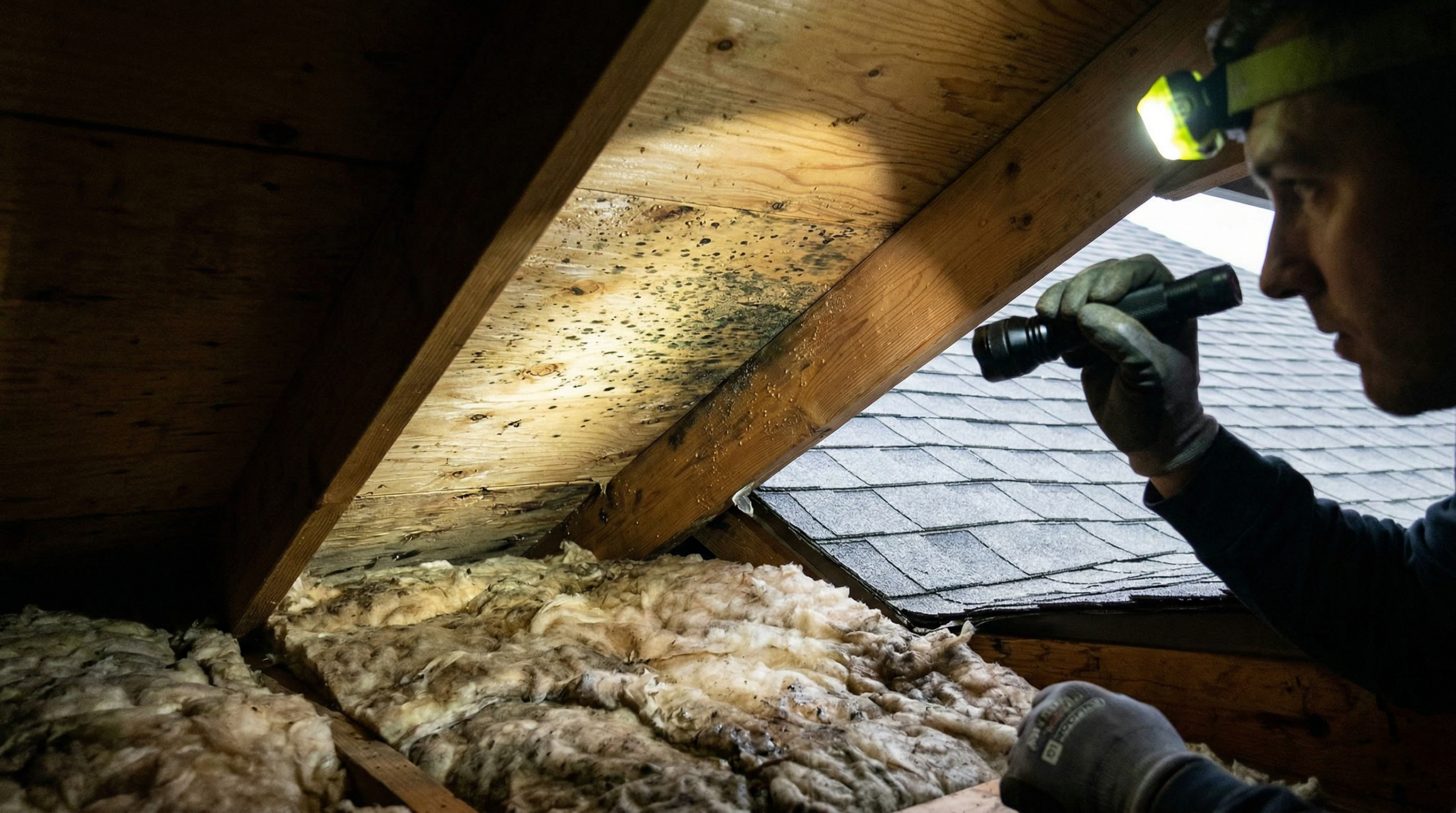
Not all leaks drip. Sometimes they “breathe.” Check your attic for a musty smell or “rusty” nails in the roof deck.
- The Bay 101 Insight: If your attic wasn’t properly ventilated during the wet months, the humidity trapped inside can cause the plywood to warp (delamination). This can lead to a full roof replacement if not caught early.
5. Gutter “Pull-Away”
Debris from redwood trees and oaks in neighborhoods like Woodside or Los Altos can weigh down gutters when soaked with rain.
- The Sign: Look for a gap between the gutter and the wood (fascia). If water is dripping behind your gutter, it’s rotting your rafters every time it drizzles.
Bay 101 Pro Tip: Avoid “door-knocker” contractors claiming they saw damage from the street. As a Diamond Certified company, we use high-resolution drone imagery and physical moisture meters to prove damage exists before we ever write an estimate.
Recent Project: Palo Alto Restoration
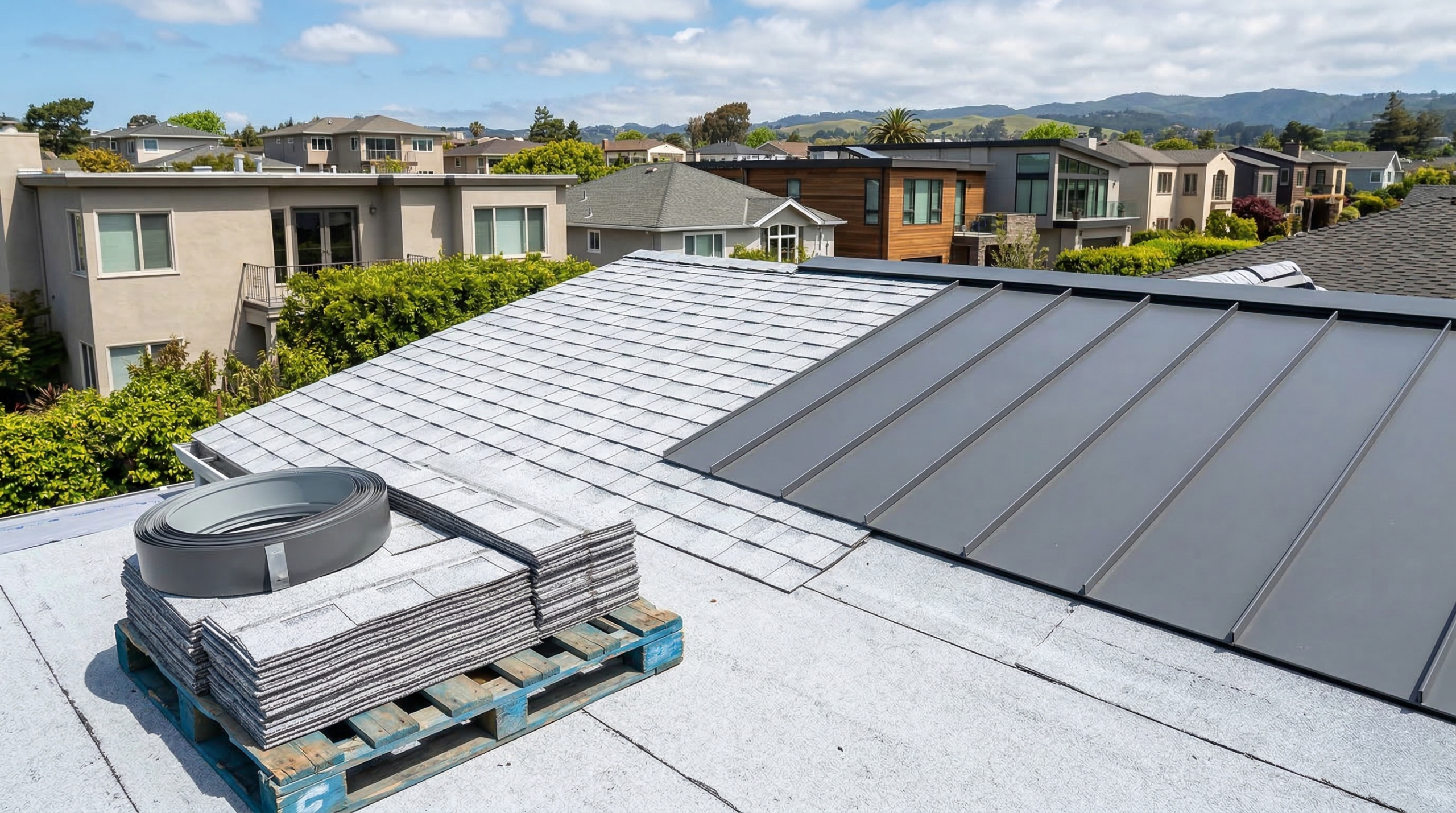
We recently completed a full tear-off and replacement for a mid-century home near Stanford University. The homeowner noticed a small spot in the garage that turned out to be a major structural issue. We installed a GAF Cool Roof system to help them save on AC costs this summer.
Protect Your Investment with a Diamond Certified Team
A “free estimate” from a generic contractor is often just a sales pitch. At Bay 101 Roofing, our audits are comprehensive technical evaluations. We handle all city permits from Burlingame to Mountain View, ensuring your home stays compliant with California Title 24 energy codes.
Don’t wait for the next storm to test your roof. Schedule Your Professional Spring Audit Here or call our local office at (Insert Phone Number).