Bay Area weather may seem mild, but it puts steady stress on your roof year-round. Coastal moisture, salt air, intense UV exposure, winter storms, and daily temperature swings all affect how long roofing materials last.
If you live in cities like San Jose, Santa Clara, Sunnyvale, Palo Alto, San Mateo, Redwood City, Pacifica, Half Moon Bay, Santa Cruz, Oakland, or Berkeley, your roofing system faces different climate pressures depending on your location.
Choosing the right roofing material for your specific microclimate can significantly extend your roof’s lifespan and reduce long-term repair costs.
Let’s break it down by region.
How Bay Area Microclimates Affect Roofing
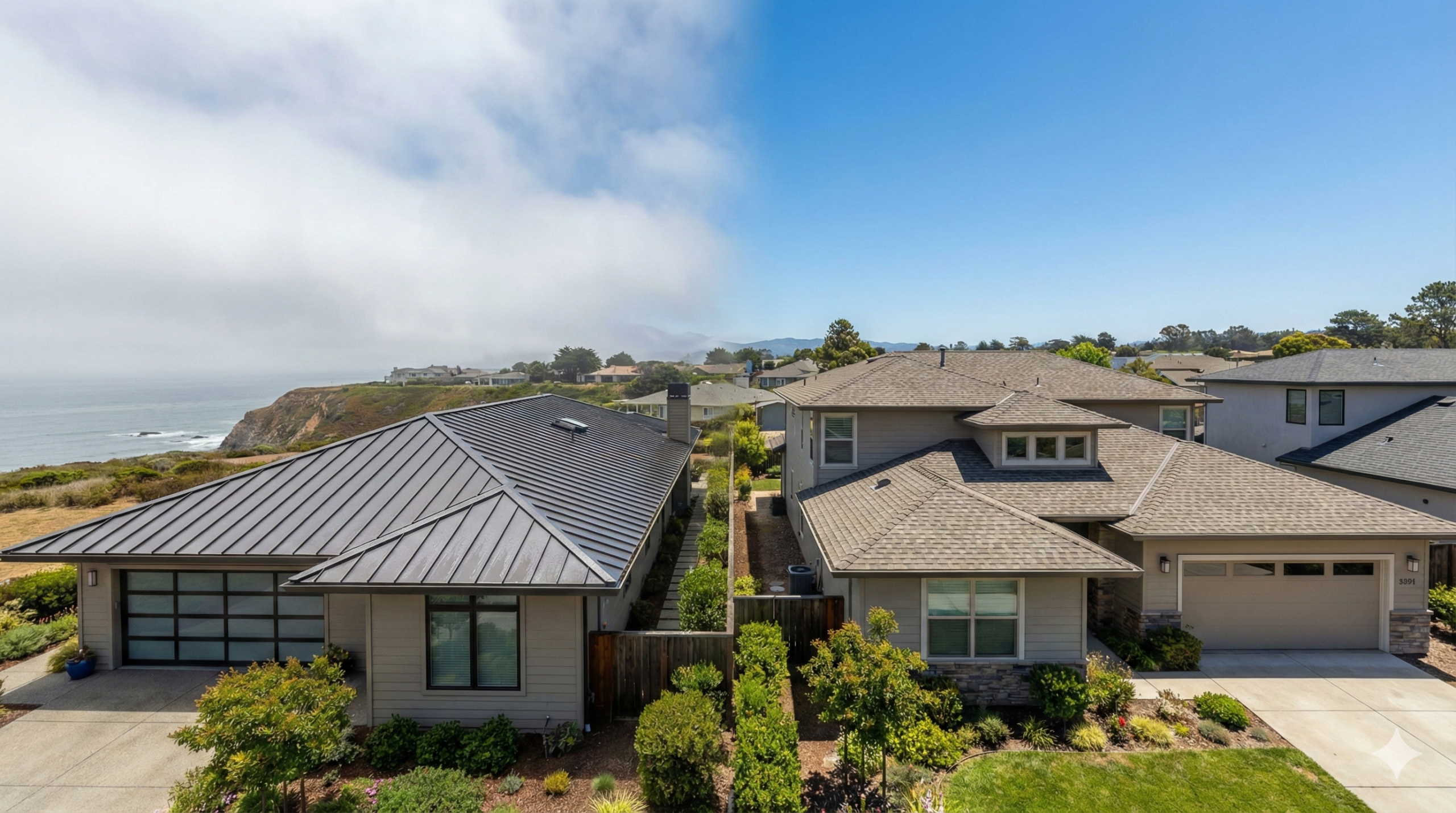
The Bay Area is known for having multiple microclimates within short distances. Roofing performance varies dramatically from inland to coastal to hillside neighborhoods.
1. Coastal Cities: Moisture & Salt Exposure
Examples:
Pacifica, Half Moon Bay, Santa Cruz, Daly City, parts of San Mateo
Homes near the coast experience:
- Heavy marine-layer moisture
- Salt air corrosion
- Persistent fog
- Higher moss and algae growth
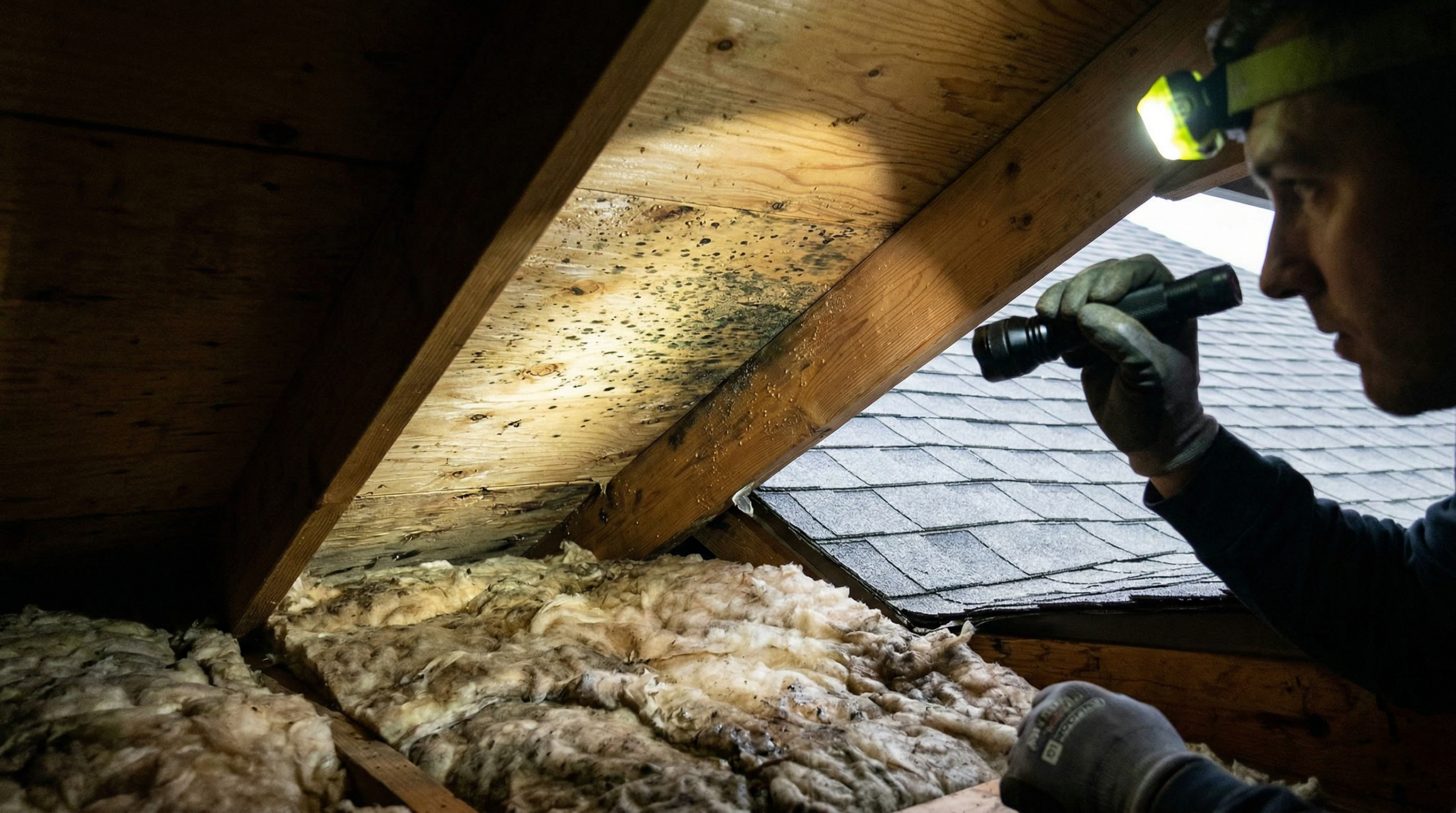
Salt accelerates metal corrosion, and constant moisture can seep into small cracks, leading to wood rot and decking deterioration beneath roofing materials.
Best roofing materials for coastal homes:
- Coated metal roofing (aluminum or galvanized steel)
- Concrete or clay tile
- High-quality architectural shingles with algae resistance
Low-grade materials tend to deteriorate faster in these areas.
2. Inland & South Bay: Intense Sun & Heat
Examples:
San Jose, Santa Clara, Sunnyvale, Cupertino, Mountain View, Milpitas
Inland cities receive stronger sun exposure and warmer temperatures compared to coastal zones.
Common roofing stressors:
- UV radiation breaking down shingles
- Granule loss
- Cracking and curling
- Heat buildup in attic spaces
Over time, UV exposure dries out roofing materials, shortening their lifespan.
Best roofing materials for inland areas:
- Architectural asphalt shingles with high UV resistance
- Cool roof systems
- Tile roofing for long-term durability
Cool roofing systems are especially effective in reducing attic heat and lowering energy costs in these cities.
3. Peninsula & Mid-Bay: Wind + Seasonal Storms
Examples:
Redwood City, San Mateo, Belmont, Foster City, Burlingame
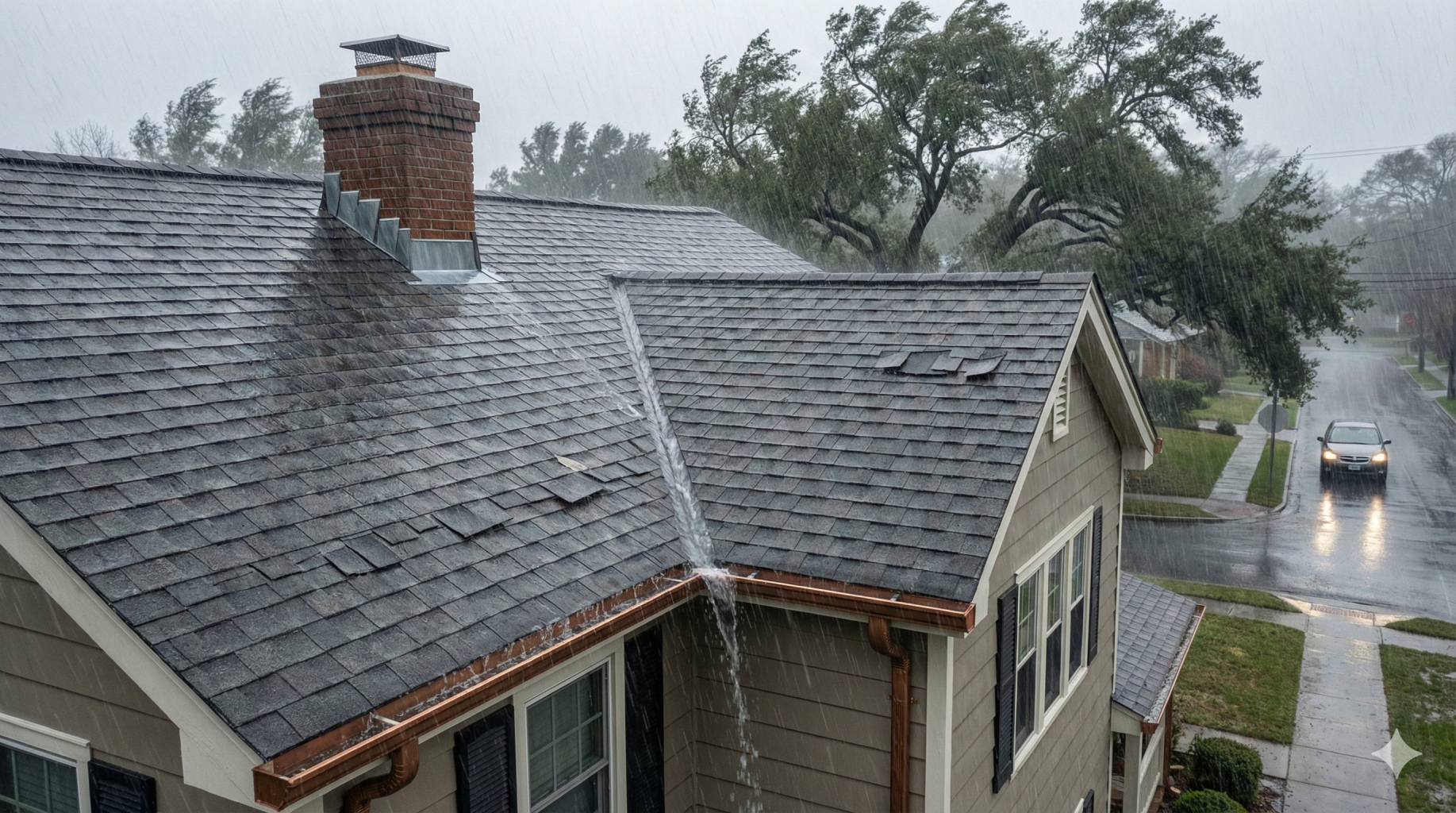
These cities often experience stronger winds and heavy winter rain during storm season.
Roofing challenges include:
- Wind-lifted shingles
- Flashing failure
- Water intrusion around vents and valleys
- Gutter overflow during atmospheric rivers
Improper installation becomes especially noticeable during storms.
Best roofing materials for wind-prone areas:
- Architectural shingles rated for high wind resistance
- Metal roofing with secure fastening systems
- Properly installed tile with storm-rated underlayment
Quality installation matters just as much as material selection.
4. East Bay Hills & Elevated Areas: Temperature Swings
Examples:
Oakland Hills, Berkeley Hills, Walnut Creek, Pleasanton, Livermore
Homes at higher elevations experience:
- Greater day-to-night temperature changes
- Increased sun exposure
- Stronger seasonal winds
Repeated expansion and contraction causes materials to loosen over time.
This can lead to:
- Cracked sealants
- Loosened fasteners
- Small gaps forming in roofing systems
Best roofing materials for temperature fluctuation areas:
- Tile roofing (handles expansion well)
- Metal roofing systems
- Premium architectural shingles
Lower-quality shingles may fatigue faster in these environments.
Which Roofing Material Performs Best in the Bay Area?
Here’s a simplified comparison:
| Roofing Material | Lifespan | Best For | Weather Strength |
|---|---|---|---|
| Architectural Asphalt Shingles | 20–30 years | Inland & moderate climates | UV & wind resistant (with upgrades) |
| Clay or Concrete Tile | 30–50+ years | Long-term durability | Sun, moisture & fire resistant |
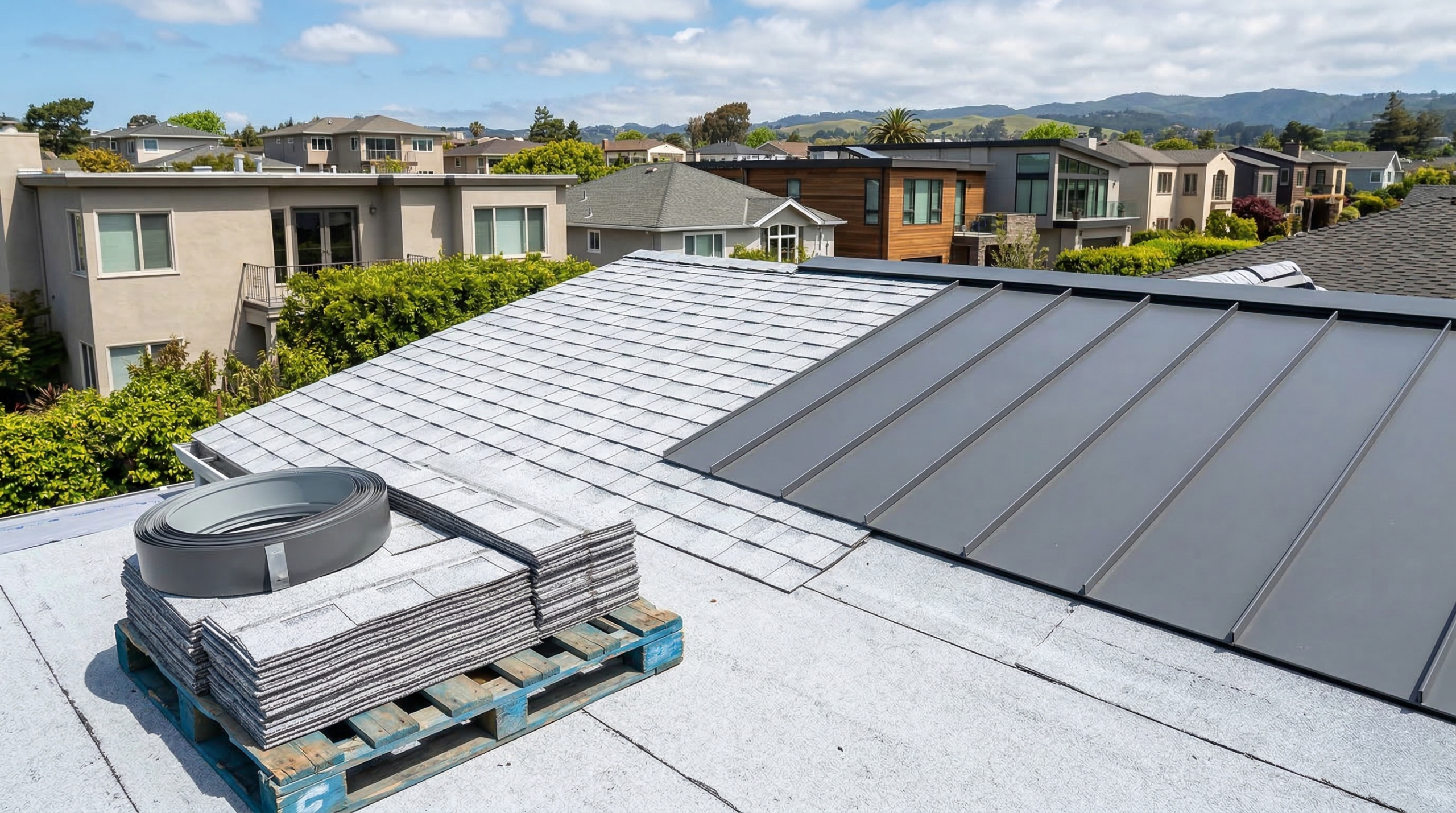
| Metal Roofing | 40+ years | Coastal & wind-prone areas | Moisture, wind & energy efficiency |
| Cool Roof Systems | 20–40 years | Hot inland cities | Heat reflection & energy savings |
No single material is “best” for every home. The right choice depends on your city, roof structure, and long-term goals.
Does Bay Area Weather Shorten Roof Lifespan?
Yes, especially if materials are not selected for your microclimate.
Even though the Bay Area avoids extreme snow or hurricanes, the combination of:
- Year-round UV exposure
- Coastal moisture
- Seasonal heavy rainfall
- Temperature fluctuations
Gradually weakens roofing systems.
Proper installation, ventilation, and material selection can add years to your roof’s lifespan.
Frequently Asked Questions
What roofing material lasts the longest in the Bay Area?
Tile and metal roofing systems generally outlast asphalt shingles, especially in coastal and high-exposure areas.
Is metal roofing good near the ocean?
Yes, when coated properly to resist salt corrosion. Aluminum and galvanized steel systems perform well in Pacifica and Half Moon Bay.
Are cool roofs worth it in San Jose or Sunnyvale?
Yes. Cool roofing systems reduce attic heat and can improve energy efficiency in warmer inland areas.
How often should roofs be replaced in Northern California?
Most asphalt roofs last 20–25 years. Tile and metal systems can last 40+ years with proper maintenance.
Final Thoughts
The Bay Area’s “mild” climate still places constant stress on roofing systems. Moisture near the coast, UV exposure inland, and winter storm activity across the region all contribute to gradual deterioration.
Choosing a roofing material designed for your specific city and microclimate can significantly reduce repairs and extend the life of your home.
Schedule a Roof Inspection with Bay 101 Roofing
Not sure which roofing material is right for your city San Jose, San Mateo, Pacifica, Redwood City, or anywhere in the Bay Area?
At Bay 101 Roofing, we understand how local weather patterns affect roofing systems. Our team provides thorough inspections, honest recommendations, and expert installations tailored to your home’s location and exposure.
Protect your home with a roofing system built for Bay Area weather.
Contact Bay 101 Roofing today to schedule your professional roof inspection and personalized estimate.