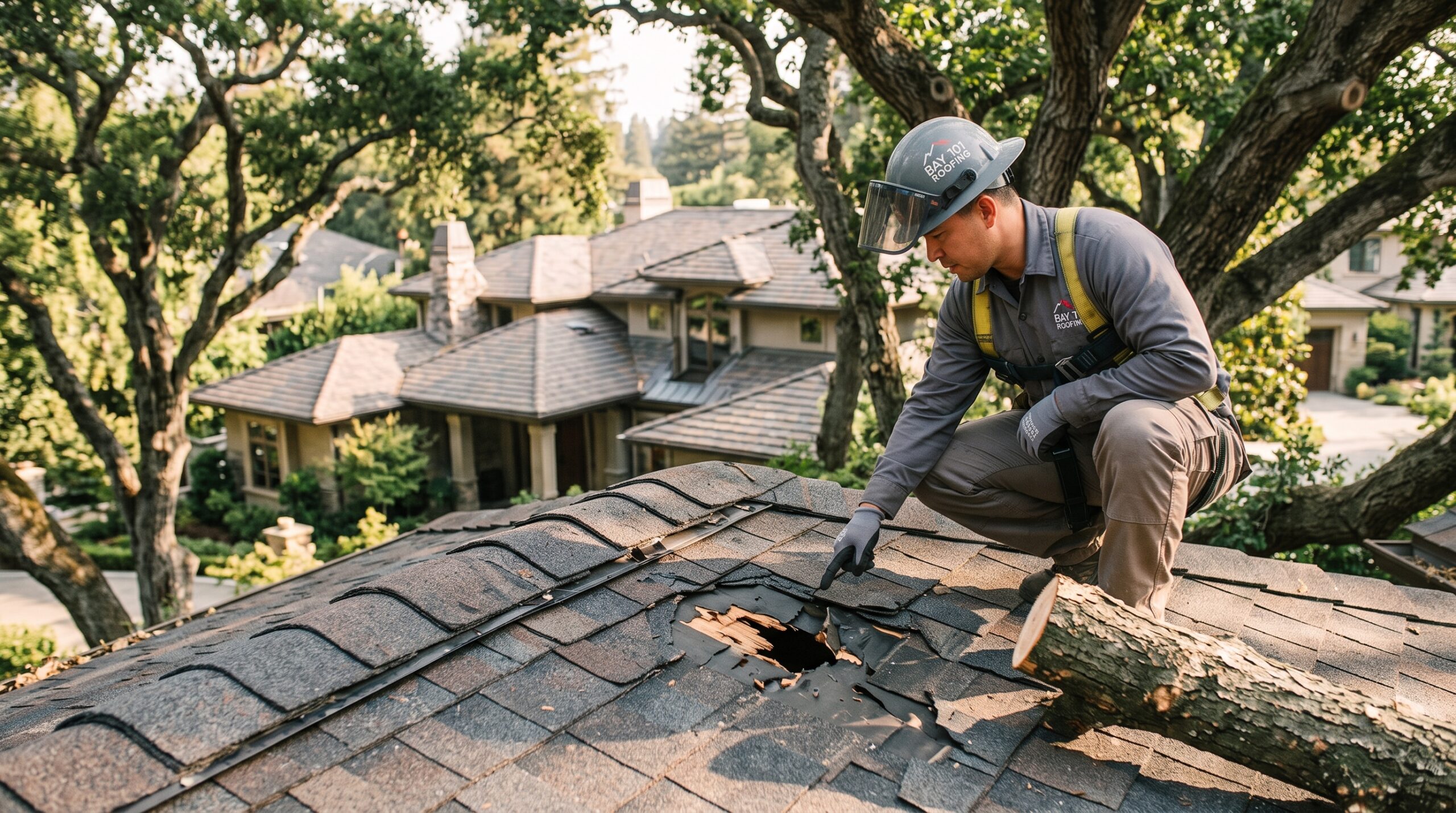
When dealing with a leaky or damaged roof, many homeowners in San Jose, San Mateo, and across Silicon Valley prefer a targeted repair to keep costs down. However, under California building codes, a series of seemingly minor repairs can quickly escalate into a mandatory, full-scale roof upgrade.
This threshold is known as the “50% Rule.”
Governed by California’s Title 24 Building Energy Efficiency Standards and local building codes, crossing this threshold changes the legal definition of your project from a simple repair to a full roof alteration. Here is what every Bay Area property owner needs to know before pulling a permit or signing a repair contract.
1. What Is the 50% Rule?
Under Title 24, if you replace or recover more than 50% of your total roof area (or more than 2,000 square feet, whichever is less) within a 12-month period, the entire roof must be brought into full compliance with current building, energy, and fire codes.
- The 12-Month Cumulative Trap: The 50% rule isn’t evaluated on a per-job basis alone. If you repair 30% of your roof in February after a winter storm and need another 25% repaired in October, the local building inspector will tally those jobs together. Crossing that 50% line within a rolling 12-month window triggers mandatory upgrades for the entire structure.
2. What Upgrades Are Triggered by Title 24?
Once your repair project crosses the 50% mark, your new roof covering must comply with two major California mandates: Cool Roof Energy Standards and Wildland-Urban Interface (WUI) Fire Safety Codes.
A. Title 24 Cool Roof Requirements (Part 6)
In climate zones throughout the Bay Area (including Climate Zones 3, 4, and 12 across San Mateo and Santa Clara counties), replacement roofing materials must meet strict Solar Reflectance Index (SRI) standards.
- Aged Solar Reflectance: Shingles, tiles, or single-ply membranes must reflect solar radiation rather than absorbing it into your attic space.
- Thermal Emittance: Materials must efficiently release any absorbed heat, helping reduce urban heat island effects and lower summer air conditioning loads.
B. Fire Code & WUI Compliance (Part 7)
Under updated statewide codes, homes located in designated Fire Hazard Severity Zones including many hillside and foothill neighborhoods in Los Gatos, Saratoga, and Belmont must upgrade to a Class A fire-rated roof assembly. This includes installing ASTM E2886 ember-resistant attic vents to prevent wind-driven embers from entering your home.
Understanding Repair vs. Full Code Upgrade
| Scope of Work | 12-Month Total Area | Title 24 Cool Roof Required? | Class A / WUI Upgrades Required? |
| Minor Spot Repair | Under 50% of total roof | No (repairs use matching compliant materials) | Repaired area only |
| Stacked Repairs | Over 50% across 12 months | Yes (Entire roof must meet SRI standards) | Yes (Full Class A assembly upgrade) |
| Full Reroof | 100% of roof area | Yes (Full prescriptive Title 24 compliance) | Yes (Full Class A assembly + ember vents) |
3. How to Strategize Your Roof Repairs
Knowing how local city permit departments enforce the 50% rule can save you thousands in unexpected change orders:
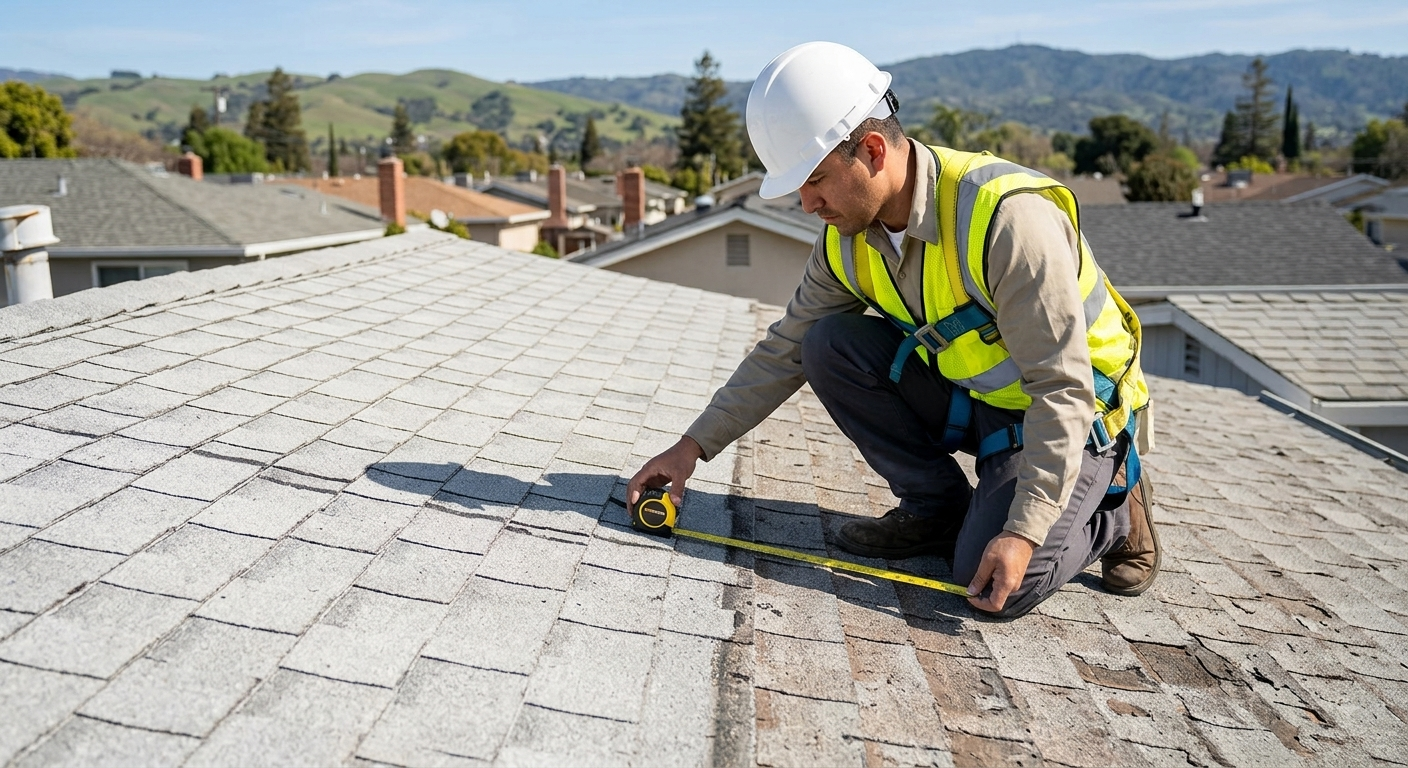
- Calculate the Total Square Footage: Have a professional roofer measure your total roof deck area before scheduling multi-phase repairs.
- Review Past Permitted Work: Check if any permitted repairs were completed on the home within the last 12 months.
- Explore Title 24 Exceptions: In some cases, adding extra attic insulation (such as R-38 or continuous deck insulation) or having an existing radiant barrier in the attic allows for compliance exceptions on specific shingle selections.
Before signing off on partial patch repairs, make sure you understand the long-term code impacts. Take time to review our May roof maintenance checklist to identify damage early, or read our guide on how long roofs typically last in the Bay Area.
Ensure Code Compliance with Bay 101 Roofing
Navigating California’s complex building codes doesn’t have to be overwhelming. Bay 101 Roofing is a Diamond Certified residential contractor serving Santa Clara and San Mateo counties. We handle all local city permitting, perform accurate square-footage audits, and install Title 24 compliant cool roof systems backed by our 10-year workmanship warranty.
Planning a roof repair or replacement in Silicon Valley?
Schedule a Free Title 24 Code & Roof Assessment or call our local team today at (408) 957-0531 to speak directly with an expert.